


TL;DR:
- Reading labels does not ensure understanding of their information, making transparent ingredient disclosure essential for safe choices. Genuine ingredient transparency involves full, honest disclosure of all ingredients, quantities, allergens, and sourcing, unlike misleading marketing terms like “clean label.” Prioritizing transparency helps identify risks from undeclared allergens, label errors, and false claims, empowering consumers to make more informed and safer health decisions.
You already read labels. Most health-focused shoppers do. But reading a label and actually understanding what it tells you are two very different things. If you’ve ever stared at a supplement panel wondering what half the ingredients actually are, you’re not alone. Understanding why prioritize ingredient transparency matters goes beyond habit. It’s the foundation of every safe, informed choice you make about what goes into your body. This article breaks down what real ingredient transparency looks like, why it protects your health, and how to use it as your most reliable tool when shopping for food and supplements.
Table of Contents
- Key Takeaways
- Why prioritize ingredient transparency: what it actually means
- The real health risks hiding in opaque labels
- Cutting through label complexity and information overload
- How to apply ingredient transparency when shopping
- My take on transparency as a wellness non-negotiable
- Products that put transparency first
- FAQ
Key Takeaways
| Point | Details |
|---|---|
| Transparency protects your safety | Undeclared allergens cause up to 34% of food recalls, making clear labeling a direct health safeguard. |
| Ingredient lists beat front-of-package claims | Marketing claims can mislead; the ingredient list shows you what’s actually in the product, in order of quantity. |
| Label complexity is a real obstacle | Fragmented regulations and scientific jargon make labels hard to read, but practical strategies help you decode them. |
| Consumer vigilance closes safety gaps | Reporting mislabeled products and checking FDA recalls strengthens the system that protects everyone. |
| Transparency builds long-term brand trust | Brands that commit to clear disclosure earn loyalty because they consistently deliver what they promise. |
Why prioritize ingredient transparency: what it actually means
There’s a difference between a brand saying “natural” on the front of a package and a brand listing every single ingredient on the back in plain, accurate language. Ingredient transparency is the second one. It means full, honest disclosure of what’s in a product, in amounts that match what’s actually there, without hiding behind marketing language or vague proprietary blends.
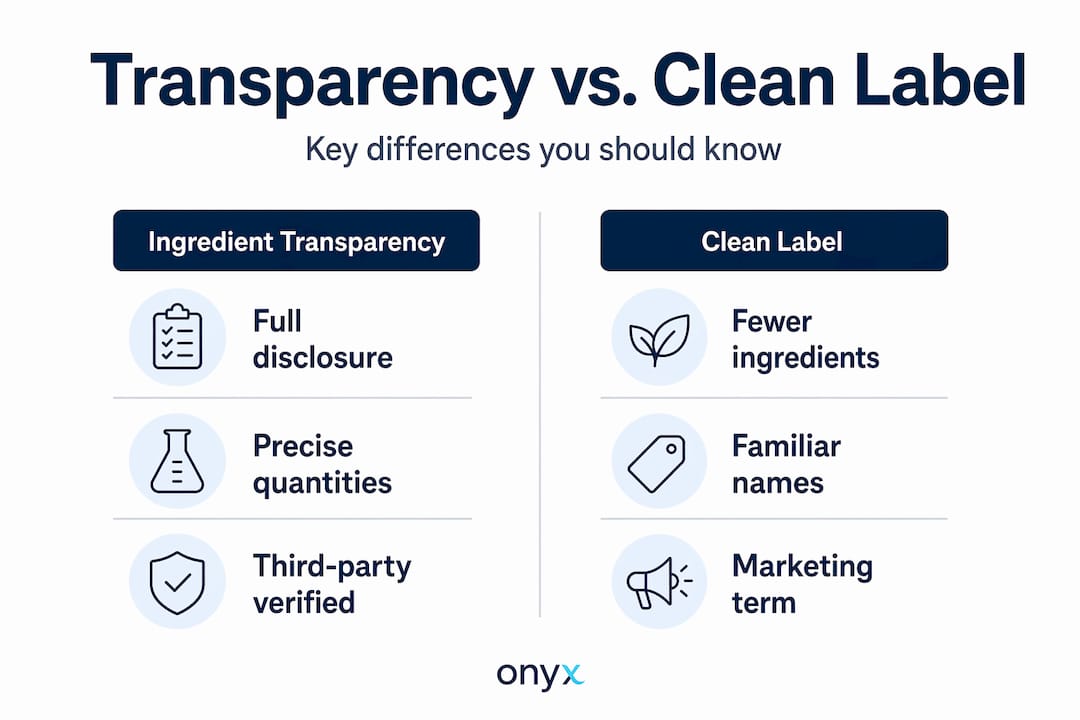
You’ve probably seen the phrase “clean label” everywhere lately. It sounds like transparency, but it isn’t always. Clean label is a marketing concept. Transparency is a standard. A product can be marketed as clean while still burying meaningful ingredients under unrecognizable names or listing them so far down that they barely exist in the formula.
Here’s what genuine ingredient transparency includes:
- A complete list of all active and inactive ingredients
- Quantities disclosed, especially for supplements with proprietary blends
- Clear allergen declarations that meet FDA requirements
- No misleading front-of-package claims that contradict what the ingredient list shows
- Sourcing information when relevant, particularly for herbal or Ayurvedic ingredients
The importance of ingredient transparency extends to brand credibility too. When a company shows you exactly what’s in their product and why, they’re putting their reputation on the line. That kind of accountability builds trust in a way that a “made with superfoods” banner never can.
Pro Tip: When evaluating a supplement or wellness product, flip it over immediately. If the Supplement Facts panel uses a single “proprietary blend” number without breaking down individual ingredient amounts, you have no way to verify whether the active ingredients are present in effective doses.
The real health risks hiding in opaque labels
This is where the stakes get serious. When ingredient transparency fails, people get hurt. Undeclared allergens cause between 26% and 34% of all food recalls in the United States, with over 22% classified as serious Class I recalls. A Class I recall means there’s a reasonable probability the product will cause serious health consequences or death.

That’s not a small or theoretical risk. Over 25% of U.S. households include someone with an ingredient allergy or sensitivity, and 76% of those shoppers read labels consistently as a direct result. They depend on those labels being accurate.
The uncomfortable truth is that most allergen-related recalls aren’t the result of bad intentions. Label errors are often preventable, caused by human error, outdated templates, supplier ingredient changes, and the absence of systematic label verification before production runs. A formula gets tweaked, the label doesn’t get updated, and a product containing milk or tree nuts goes out with no allergen warning.
| Risk Factor | Real-World Impact |
|---|---|
| Undeclared allergens | 26%–34% of all U.S. food recalls; serious hospitalization risk |
| Supplier ingredient changes | New allergens or additives enter formula without label update |
| Manufacturing cross-contact | Shared lines introduce allergens not reflected on labels |
| Mislabeled supplements | Ingredients at incorrect doses; compliance failures signal quality gaps |
“The ingredient list is a factual tool. Front-of-package claims show you what a brand wants you to think. The ingredient list shows you what’s actually there.” — Why ingredient lists matter
The order of ingredients matters too. Ingredients are listed from highest to lowest quantity. If the first three ingredients in a “protein-packed” bar are sugar, maltodextrin, and rice flour, the protein is almost certainly a minor supporting player. The front of the package doesn’t tell you that. The ingredient list does.
Cutting through label complexity and information overload
Here’s a tension worth naming honestly. Brands that genuinely commit to ingredient transparency in products face real operational challenges. Fragmented state and federal labeling regulations, supplier documentation requirements, and changing formulations create a system where errors happen even with good intentions. Smaller brands in particular may struggle to keep labels perfectly synchronized with formulas across every product run.
That complexity often lands in your lap as a consumer in the form of dense, jargon-heavy labels that feel impossible to parse. Scientific ingredient names, footnotes referencing daily values, and compliance language designed for regulatory purposes can bury the information you actually need.
Consumers trust clear, simple disclosures more than technical messaging. Brands that succeed at transparency make it legible, not just legally compliant. There’s a meaningful difference between a brand that lists every ingredient because they’re required to and one that actively designs their labels so you can understand what you’re reading.
A few practical ways to identify genuinely transparent labeling:
- Ingredient names you recognize or can look up easily
- Individual ingredient amounts listed rather than a single blend number
- Third-party certifications such as NSF International, USP, or Informed Sport on supplement panels
- A brand that publishes sourcing or quality-testing information on its website
Supplements specifically require a different kind of scrutiny. Supplement Facts panels follow strict formatting rules set by the FDA, distinct from conventional food label requirements. Math errors, missing footnotes, or incorrectly formatted serving sizes on a Supplement Facts panel are red flags that may indicate broader quality control issues in the manufacturing process.
Pro Tip: Third-party certifications are one of the fastest shortcuts to verifying ingredient accuracy. A certified product has had its label independently verified against its actual contents, removing the guesswork entirely.
How to apply ingredient transparency when shopping
Knowing why transparency matters is step one. Knowing how to use it when you’re actually standing in an aisle or scrolling through a product page is step two. Here’s a practical framework for making it work.
-
Start at the back. Before you read a single claim on the front of a package, go to the ingredient list. Read it fully. Ask yourself whether you understand what each ingredient is and what it does.
-
Check for allergen declarations. If you or anyone in your household has an allergy or sensitivity, scan the “Contains” statement as well as the ingredient list itself. Manufacturing notes like “may contain” are voluntary, not guaranteed, so reading labels consistently is non-negotiable.
-
Research unfamiliar ingredients. You don’t have to memorize every chemical compound. A quick search for an ingredient name will tell you whether it’s a common additive, a beneficial herb, or something with a concerning safety profile.
-
Use FDA resources. The FDA maintains a publicly accessible recall database. If you have doubts about a product, checking for active recalls takes less than two minutes. Consumer reports to the FDA are also a key mechanism for identifying unsafe or mislabeled supplements after they reach the market.
-
Seek brands that disclose proactively. There’s a meaningful difference between a brand that buries its ingredient list and one that leads with it. Brands that explain their formulations, disclose sourcing, and publish third-party test results are putting their accountability front and center.
Supplements and beauty products deserve particular attention here. Unlike food, supplements are not pre-approved by the FDA before sale. Transparency in supplements is therefore one of the few tools you have to verify quality before a product ever enters your body. When comparing options in the mushroom supplement space, for example, knowing what’s in your product before you buy is the most direct form of self-protection available.
Pro Tip: When comparing vitamin brands, prioritize those that provide a certificate of analysis from a third-party lab. This document confirms that what’s on the label matches what’s in the bottle, down to the milligram. Some brands will share this on request; reputable ones post it publicly.
My take on transparency as a wellness non-negotiable
I’ve spent years watching the wellness industry promise transparency while delivering something closer to the appearance of it. A sleek label with four ingredients sounds honest. But when two of those four are listed without quantities, and the brand’s sourcing is a single vague supplier statement, that’s not transparency. That’s aesthetic minimalism dressed up as accountability.
What I’ve learned is that real transparency makes brands slightly vulnerable. It means showing you a formula that a competitor could copy, admitting that an ingredient comes from a particular region with known supply variability, or disclosing that a product contains a common allergen trace. Brands that are willing to be that specific are the ones worth trusting.
I’ve also seen how consumer behavior shifts when people actually start reading labels closely. The surprise isn’t usually about dangerous ingredients. It’s about discovering that a product they thought was solving a specific problem contains barely a meaningful dose of the active ingredient they were paying for. Transparency fixes that. It gives you the information to make the comparison that matters.
My honest take is that consumer demand is the most powerful forcing function the industry has. When health-focused shoppers read labels at an 87% rate and choose accordingly, brands that hide behind their packaging lose. That’s not idealism. That’s market pressure working exactly as it should.
— Chris
Products that put transparency first
At Onyxwellness, ingredient transparency isn’t a marketing angle. It’s built into how the products are designed. Every formulation reflects the Ayurvedic principle that what you put in your body should be something you can understand and trust, not a guessing game.
If gut health is your focus, the Digestive + Gut Health Strips are formulated with clearly disclosed herbal ingredients, no hidden fillers, and delivered in a dissolvable strip format that makes dosing straightforward and consistent. For cognitive support, the Mushroom Focus Strips bring functional mushroom benefits with full ingredient clarity, so you know exactly what you’re taking and why. You can explore the full range at Onyxwellness and find formulations where every ingredient earns its place on the label.
FAQ
What does ingredient transparency actually mean?
Ingredient transparency means fully disclosing every ingredient in a product, including quantities when relevant, without hiding behind marketing language or proprietary blends. It gives consumers the information they need to make safe, informed choices.
Why do undeclared allergens cause so many food recalls?
Undeclared allergens cause 26% to 34% of food recalls in the U.S., largely because of preventable human errors in labeling, outdated templates, and supplier formula changes that don’t trigger label updates.
How is a supplement label different from a food label?
Supplements use a Supplement Facts panel with stricter FDA formatting requirements than conventional food labels. Errors in formatting or math on that panel can indicate quality control problems in the manufacturing process.
Is “clean label” the same as ingredient transparency?
No. Clean label is a marketing term suggesting minimal or recognizable ingredients. Ingredient transparency is an operational and ethical standard that requires full, accurate disclosure regardless of how the front of the package is styled.
How can I verify that a supplement’s label is accurate?
Look for third-party certifications such as NSF, USP, or Informed Sport, and ask brands for a certificate of analysis. These independently verify that a product’s actual contents match what’s listed on the label.