


Even the most driven professionals hit a wall. You’re sharp, capable, and committed to results, yet by mid-afternoon your focus blurs, your patience thins, and the idea of a real wind-down feels like a luxury you can’t afford. The good news? You don’t need a two-hour morning ritual or a weekend retreat to feel better. A structured wellness workflow, one rooted in Ayurvedic principles and backed by modern research, can fit inside the schedule you already have. This guide walks you through every step: assessing where you are now, choosing the right tools, building a daily rhythm, and measuring whether it’s actually working.
Table of Contents
- Identify your wellness baseline and barriers
- Gather tools and design your personalized wellness toolkit
- Implement your wellness workflow: Step-by-step guide
- Track progress, troubleshoot barriers, and pivot as needed
- Why the best wellness workflow isn’t about perfection
- Explore Onyx Wellness: Next steps for real results
- Frequently asked questions
Key Takeaways
| Point | Details |
|---|---|
| Assess your baseline | Know your current stressors and routines before building a new workflow. |
| Choose simple, proven tools | Select a few easy-to-implement practices like breathwork and adaptogenic herbs. |
| Start small and adapt | Integrate short Ayurvedic practices into daily life and adjust as needed. |
| Track your progress | Measure sleep, energy, and resilience to see real improvements over weeks. |
| Perfection isn’t required | Consistent small changes create lasting wellness for busy professionals. |
Identify your wellness baseline and barriers
Before you change anything, you need to know what you’re working with. Most professionals skip this step and jump straight to downloading a meditation app or buying supplements. That’s like renovating a house without checking the foundation first. Start by spending five quiet minutes answering a few honest questions about your current habits.
Here’s what to look at:
- Sleep quality: Are you waking up rested, or just surviving on caffeine?
- Energy patterns: When does your focus peak? When does it crater?
- Stress triggers: Is it back-to-back meetings, email overload, or decision fatigue?
- Recovery habits: Do you have any intentional wind-down routine, or do you fall asleep mid-scroll?
- Nutrition timing: Are you skipping meals and then overeating late?
These aren’t trick questions. They’re your data points. Occupational stress and sleep quality scores improve significantly following structured yoga and Ayurveda interventions, which means the habits you build from here genuinely move the needle.
Once you’ve reflected, use this simple baseline table to map your starting point:
| Wellness area | Current state (1-5) | Biggest obstacle |
|---|---|---|
| Sleep quality | ||
| Daytime energy | ||
| Stress resilience | ||
| Mental clarity | ||
| Physical recovery |
Rate each area honestly. A score of 1 means it’s a real problem; 5 means you’re solid. This table becomes your reference point when you check progress later.
For additional context on healthy stress coping skills, external resources can help you name what you’re experiencing and frame it constructively. You can also explore our wellness habits overview for broader context on building sustainable daily practices.
Pro Tip: Run a simple 1-week tracker. Every day, jot down when your energy dips, what triggered stress, and how long you slept. After seven days, patterns emerge fast. You’ll likely spot two or three consistent time leaks or trigger moments that are costing you more than you realized.
Gather tools and design your personalized wellness toolkit
Now that you know your baseline, the next move is choosing the right tools. Not every tool, just the right ones for your life. The most common mistake here is trying to do everything at once and burning out within a week.
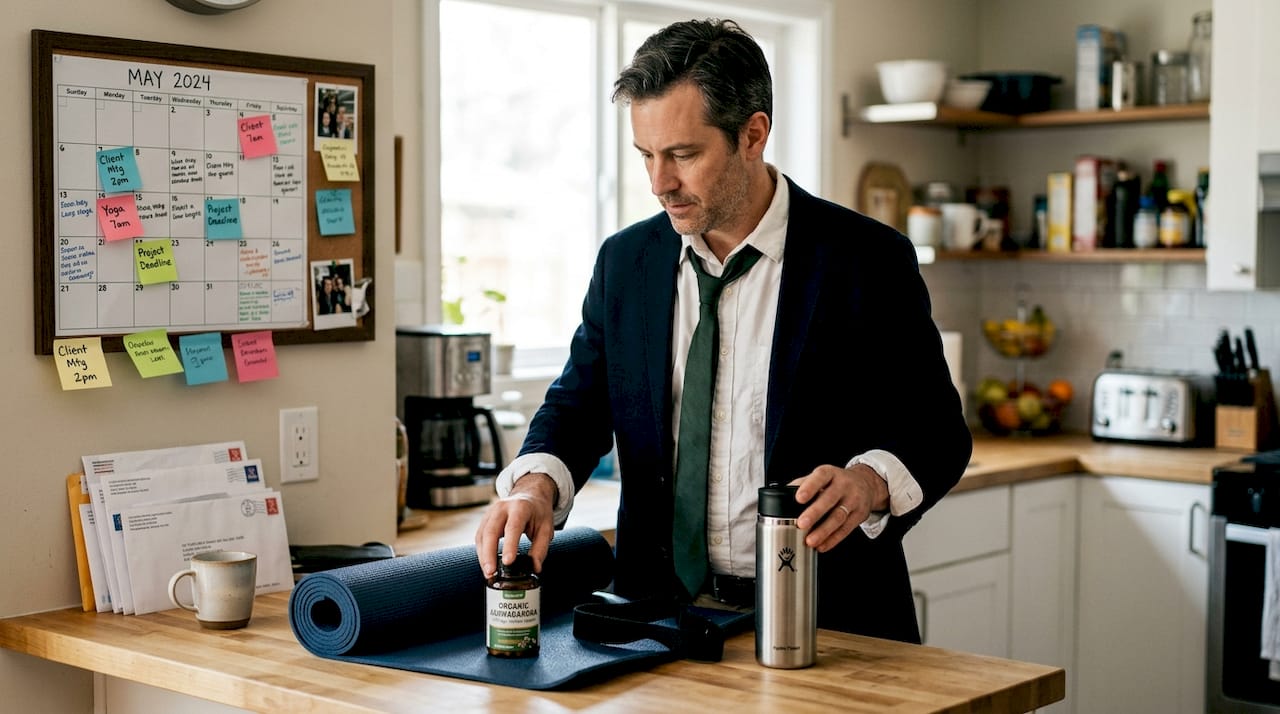
Research confirms that both yoga and Ayurveda protocols reduce stress and enhance mental and emotional health, which means you have real, evidence-backed options to choose from. The key is matching those options to your actual schedule and personality.
Here’s a quick comparison of common wellness tools:
| Tool | Time required | Portability | Best for |
|---|---|---|---|
| Breathwork (pranayama) | 2-5 min | Anywhere | Stress, focus |
| Meditation app | 5-10 min | Phone | Anxiety, sleep |
| Ashwagandha supplement | 30 sec | Bag or desk | Cortisol, energy |
| Herbal tea ritual | 5 min | Office/home | Evening wind-down |
| Dissolvable wellness strips | 10 sec | On-the-go support |
For your Ayurvedic boosters specifically, consider these as your starting lineup:
- Ashwagandha: An adaptogen that helps your body handle stress more gracefully over time
- Tulsi (Holy Basil): Supports mental clarity and a calm nervous system
- Short pranayama (box breathing): Four counts in, hold, four counts out, hold. Repeat four times
- Digital reminders: A simple phone alarm labeled “breathe” or “step away” works surprisingly well
- Sleep support tools: Targeted aids for evening recovery, especially when your mind won’t quiet down
For structuring your evenings, evening routine tips offer practical guidance on winding down in ways that actually stick. You can also browse wellness routines for professionals to see how others in demanding roles are building their rhythms.
Pro Tip: Start with just one or two tools you can use every single day without disrupting your flow. Consistency with a simple tool beats occasional use of a complex one every time.
Implement your wellness workflow: Step-by-step guide
Here’s where it gets practical. You have your baseline data and your toolkit. Now it’s time to string them into a daily sequence that actually holds up under real-world pressure.
“Dinacharya routines, the Ayurvedic practice of daily habits aligned with natural rhythms, support circadian balance, mental health, and stress resilience, and they can be adapted to fit modern schedules.” Dinacharya Practices for Mental Health
Follow this sequence and adjust timing to your own schedule:
- Wake-up anchor (2 min): Before reaching for your phone, take three slow breaths and set one intention for the day. This primes your prefrontal cortex before the noise starts.
- Morning pranayama (3-5 min): Box breathing or alternate nostril breathing. Do it while your coffee brews. Zero extra time required.
- Strategic breakfast or supplement: Take your adaptogen or wellness supplement with your first meal. Pairing it with an existing habit locks it in.
- Mid-morning micro-break (2 min): Step away from your screen. Look out a window. Roll your shoulders. This isn’t indulgent; it’s neurologically necessary.
- Midday recharge (5-10 min): A short walk, a mindful lunch away from your desk, or a few minutes with a relaxation and focus aid can reset your afternoon trajectory.
- Evening wind-down (5-10 min): Dim your lights, make herbal tea, and avoid screens for at least 20 minutes before bed. This signals your nervous system that the workday is genuinely over.
Clinical trials show that yoga slightly outperforms Ayurveda alone for stress and sleep quality, but combining both approaches yields the most significant results overall.
Here’s a quick reference for when time is tight:
| Practice | Full version | Compressed version |
|---|---|---|
| Morning breathwork | 5 min pranayama | 60-sec box breathing |
| Midday reset | 10-min walk | 2-min desk stretch |
| Evening wind-down | 10-min tea ritual | 3-min phone-free quiet |
Pro Tip: Tether new habits to ones you already have. Breathwork during your commute, herbal tea with your post-lunch break, a supplement with your morning coffee. The habit already exists; you’re just adding a layer.
For broader support across your routine, integrated wellness support is available to help you fill in the gaps.
Track progress, troubleshoot barriers, and pivot as needed
Building the workflow is step one. Keeping it alive is the real work. Without some form of tracking, it’s easy to drift back to old patterns without even noticing.
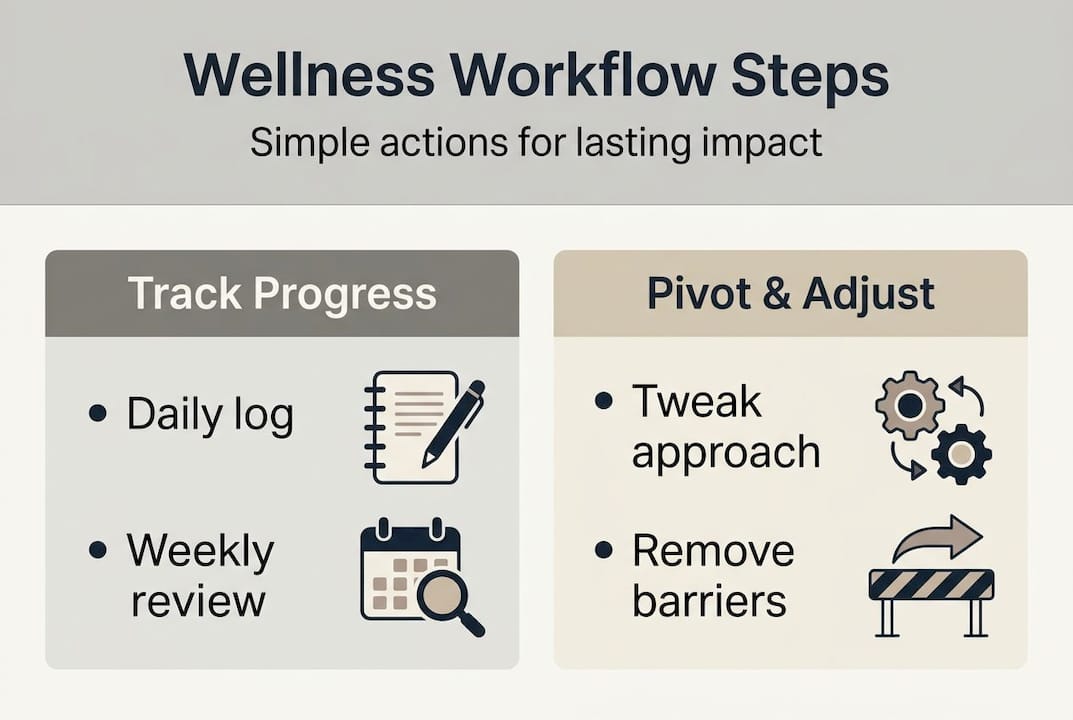
Research measuring PSQI sleep scores, stress levels, and cognitive performance shows measurable improvements within weeks of consistent practice. That’s encouraging, but only if you’re paying attention to your own data.
Track these simple metrics weekly:
- Sleep quality: Did you fall asleep easily? Wake up rested?
- Energy levels: Did you hit a wall before 3 p.m., or hold steady?
- Mood and patience: How did you handle friction or unexpected demands?
- Workload resilience: Could you stay focused during high-pressure moments?
- Routine consistency: How many days did you follow your workflow?
When things go off track, and they will, resist the urge to scrap everything. Instead, ask one question: what’s the smallest version of this practice I can still do today? Missed your morning breathwork? Do 60 seconds at your desk before your first meeting. Skipped your evening wind-down? Put your phone face-down for five minutes before sleep. Small is not failure. Small is the point.
For preventive strategies that keep your workflow from collapsing under workload pressure, preventive workflow strategies offer useful frameworks. And if sleep is the area slipping most, natural sleep support can provide targeted help during high-stress periods.
Remember: even minor daily practices compound over time. A two-minute breathing habit done consistently for 90 days creates a measurably different stress response than an hour-long session done twice a month.
Why the best wellness workflow isn’t about perfection
Here’s something most wellness content won’t tell you: rigid systems fail high performers. Not because high performers lack discipline, but because their lives are genuinely unpredictable. A framework that demands perfect daily execution is one missed day away from total abandonment.
What actually works is a flexible structure built around micro-habits. Ayurvedic philosophy has always understood this. The concept of dinacharya isn’t about doing everything perfectly; it’s about returning to rhythm after disruption. That’s a fundamentally different mindset than the all-or-nothing approach most productivity culture promotes.
The professionals who sustain wellness gains long-term aren’t the ones who never miss a day. They’re the ones who never miss twice in a row. They let go of guilt quickly and refocus on their long-term average, not yesterday’s score. You can explore more on building that kind of resilience through real-world workflow insights. The goal isn’t a perfect routine. It’s a forgiving one.
Explore Onyx Wellness: Next steps for real results
You’ve built the framework. Now it’s time to fill it with tools that actually deliver. Onyx Wellness was designed specifically for people like you: professionals who want natural, effective support without adding complexity to an already full day.
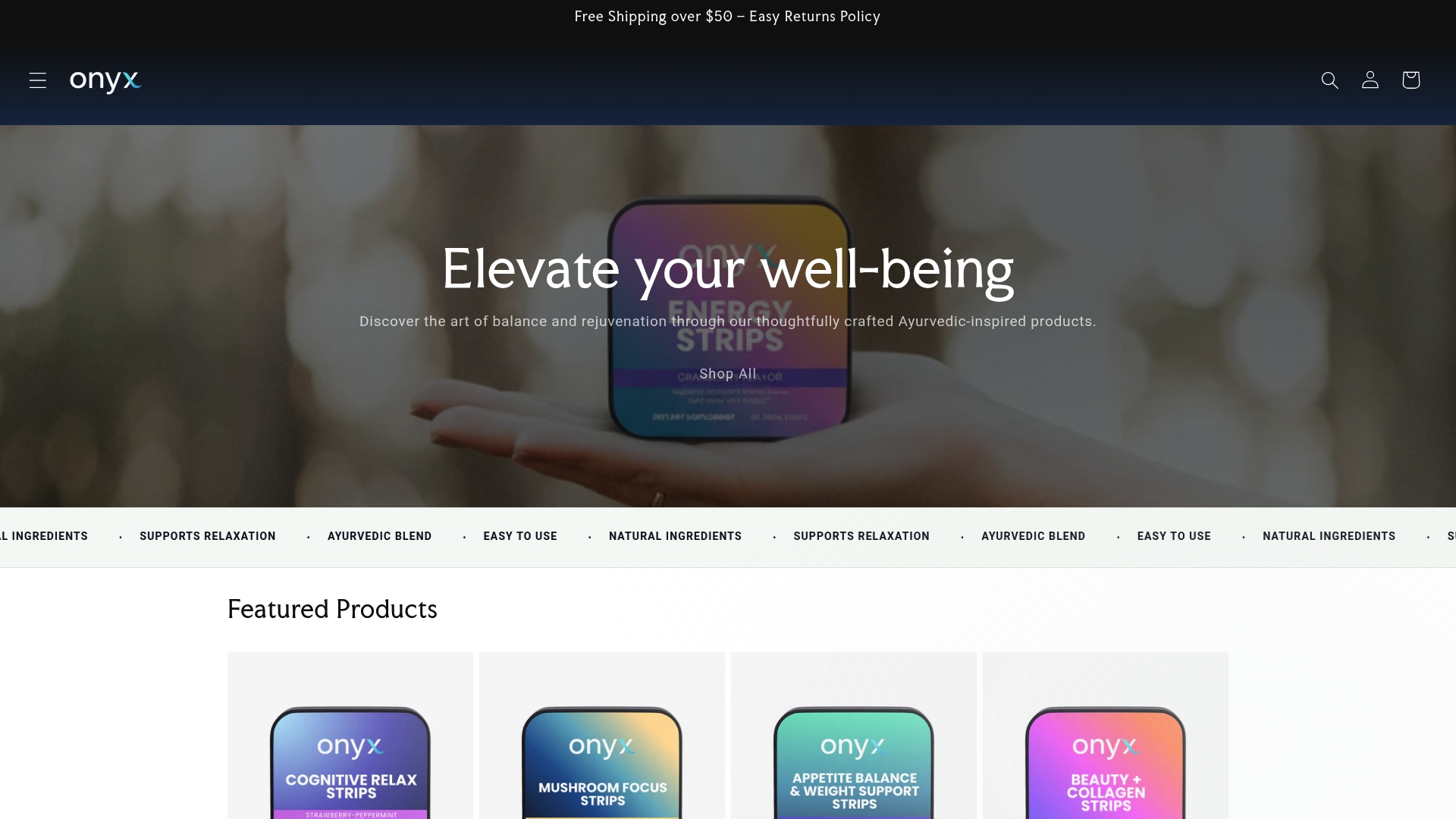
From relaxation strips that dissolve in seconds without water to essential daily supplements rooted in Ayurvedic tradition, every product is formulated for convenience and real results. No complicated regimens. No guesswork. Just quality-assured wellness support that fits inside the workflow you’ve already built. Visit Onyx Wellness to explore curated solutions matched to your goals and lifestyle.
Frequently asked questions
What is the fastest way to start a wellness workflow if I’m always busy?
Anchor one tiny practice into your existing routine, like 2 minutes of breathwork or a consistent bedtime wind-down, and build gradually from there. Even brief Ayurvedic routines drive measurable improvements in stress and sleep.
Will an Ayurvedic workflow really fit into my hectic schedule?
Yes, because modern adaptations focus on short, high-impact practices that mesh with even unpredictable routines. Dinacharya principles are specifically designed to flex with real-life demands while still supporting circadian and stress management.
Which tools make the biggest difference for professionals under stress?
A combination of quick pranayama, adaptogenic herbs, and reliable sleep support tends to be most effective. Ashwagandha and yoga-based practices are proven to reduce stress and improve cognitive performance in working adults.
How can I tell if my wellness workflow is working?
Track your sleep quality, mood, and energy for 2-4 weeks. PSQI and stress scores improve within weeks of consistent routine use, so noticeable changes in those areas are a reliable signal that your workflow is taking hold.