


TL;DR:
- Holistic recovery involves addressing all aspects of health, including sleep, digestion, stress, and social connection, rather than focusing solely on physical rest. Building simple, consistent routines—such as regular sleep, relaxation practices, and nutritious habits—supports long-term resilience and gradual progress. Practicing patience and personalization, holistic methods complement medical care and promote sustainable well-being.
You’re doing the right things. You track your sleep, take your supplements, and make time for the gym. Yet somehow, you still wake up feeling like you’ve never quite recharged. That gap between doing everything right and actually feeling restored is more common than you might think, and it’s usually a sign that recovery is being treated as a single variable rather than a whole-person practice. This guide walks you through a practical, step-by-step approach to holistic recovery, drawing from Ayurvedic wisdom and modern wellness science, designed to fit your real, busy life.
Table of Contents
- What is holistic recovery? Key concepts and principles
- What you need to begin: Recovery essentials
- How-to: Build your holistic daily recovery routine
- Troubleshooting: Common obstacles and real-world fixes
- How will you know it’s working? Signs of recovery progress
- Perspective: Why tiny, consistent shifts beat all-in overhauls
- Ready for deeper recovery? How Onyx Wellness supports your journey
- Frequently asked questions
Key Takeaways
| Point | Details |
|---|---|
| Address whole-person recovery | Effective holistic recovery means focusing equally on sleep, nutrition, stress reduction, and emotional support. |
| Start simple and consistent | Small, daily habits—like a set wind-down routine or regular meals—deliver bigger results than unsustainable overhauls. |
| Personalize your approach | Choose practices that fit your lifestyle and adjust as you go for best results. |
| Track your progress | Improvements in sleep, energy, and clarity signal your recovery routine is working. |
What is holistic recovery? Key concepts and principles
With the problem clear, let’s ground ourselves in what makes holistic recovery different and why it’s worth your attention.
Holistic recovery means tending to all the layers of your health, not just the physical. Most people associate recovery with rest and protein shakes. Holistic recovery goes further, addressing the interconnected systems that affect how you feel every day: your sleep quality, your digestion, your stress response, and even your sense of social connection. According to a whole-person recovery model, genuine recovery involves cycling through sleep and rest, nutrition and digestion, stress regulation through mind-body practices, and emotional or social support. Leave any one of those out, and the loop stays broken.
The difference between conventional and holistic recovery comes down to scope. Conventional recovery often focuses on fixing a specific problem, like treating inflammation after a workout or managing insomnia with sleep aids. Holistic recovery asks a broader question: what does your entire system need to function at its best? That might mean addressing why you’re waking at 3 a.m. rather than just treating the symptom with melatonin.
Here is a quick comparison to put things in context:
| Approach | Focus | Method | Limitation |
|---|---|---|---|
| Conventional | Single symptom | Medication, targeted therapy | May miss root causes |
| Holistic | Whole person | Lifestyle, diet, mind-body | Requires consistency |
| Ayurvedic | Constitution and rhythm | Routine, herbs, self-care | Needs personalization |
Important note: holistic tools work best as a complement to evidence-based medical care. A systematic review of holistic care interventions confirmed promising benefits but noted that evidence is still evolving and integration with standard care requires ongoing research. In other words, your doctor is still in your corner. Holistic practices simply give you more tools to work with.
Key principles to keep in mind as you read on:
- Body: Physical rest, movement quality, and nutrition timing all matter.
- Mind: Stress regulation and mental clarity are recovery levers, not afterthoughts.
- Emotion and social connection: Chronic isolation or unaddressed emotional load can stall physical recovery entirely.
- Rhythm: Your body responds to consistent patterns more than it responds to occasional heroic efforts.
For a deeper foundation, this step-by-step recovery guide offers additional context if you want to explore the building blocks further.
What you need to begin: Recovery essentials
Now that you know what holistic recovery involves, here’s what you need before starting so you set yourself up for real, repeatable results.
Think of this as your baseline toolkit. You do not need to overhaul your life in a weekend. In fact, doing so almost guarantees you will burn out and abandon the whole effort by week two. Start with anchors, not an entire regimen.
The three-anchor approach works consistently well. Research on Ayurvedic daily routine (called dinacharya) supports picking two to three consistent daily anchors, such as a wind-down ritual, a relaxation practice, and one nutrition or movement habit, and holding to them for several weeks before layering in anything new. Training effects are real. The more you repeat a recovery behavior, the more your nervous system learns to drop into rest mode faster.
Rest itself is not one-dimensional. The APA’s framework on rest types identifies seven categories: physical, mental, sensory, creative, emotional, social, and spiritual. Most people only address physical rest and wonder why they still feel depleted. A diverse rest practice, even in small doses, can close that “rest deficit” far more effectively than simply sleeping longer.
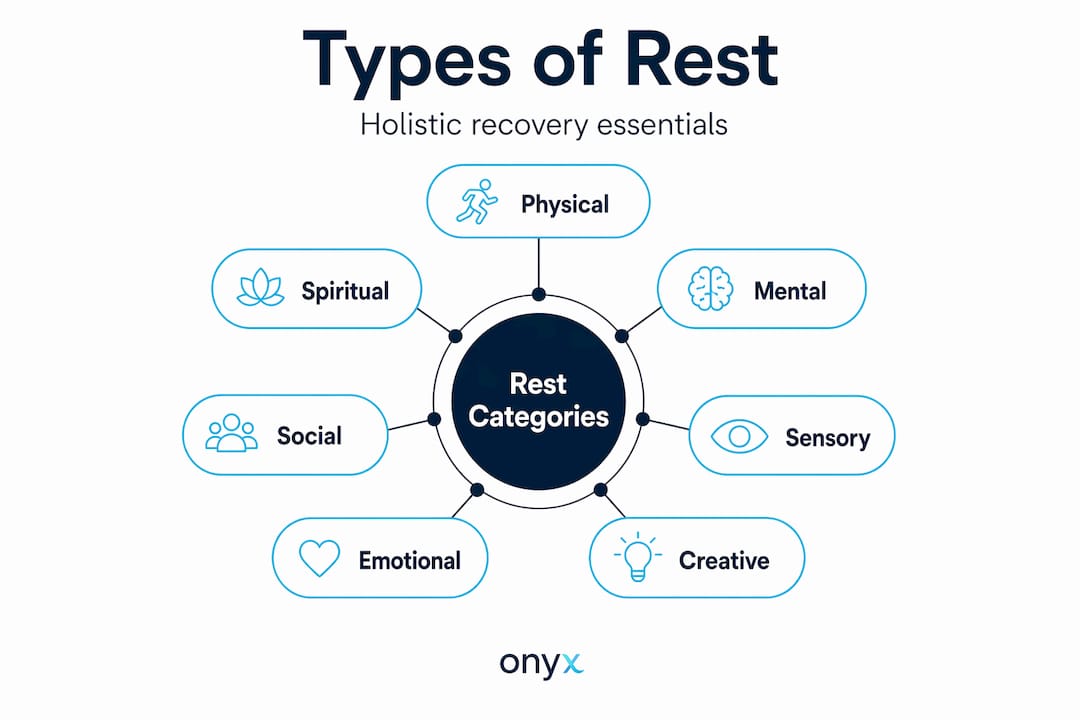
Here is a comparison of how a minimal versus a fuller recovery setup might look:
| Element | Minimal setup | Fuller setup |
|---|---|---|
| Sleep environment | Dark room, consistent bedtime | Blackout curtains, white noise, cool temperature |
| Relaxation practice | 5-minute breathing exercise | Guided breathwork, meditation, or gentle yoga |
| Nutrition | Regular meal timing | Warm, nourishing meals; reduced caffeine after noon |
| Movement | Daily walk | Yoga, stretching, or low-intensity movement |
| Support tools | Herbal tea before bed | Dissolvable herbal strips, adaptogenic supplements |
Here is a practical numbered sequence for getting started:
- Lock in a sleep window. Choose a wake time and count back seven to eight hours. Commit to this schedule even on weekends for at least two weeks.
- Choose one relaxation practice. Breathwork, a five-minute body scan, or gentle oil self-massage all qualify.
- Add one nutrition anchor. This could be as simple as eating dinner by 7 p.m. or swapping your after-dinner coffee for an herbal tea.
- Gather simple tools. A yoga mat, blackout curtains, herbal teas, and whatever supplements you already trust are enough to start.
- Use your Ayurveda relaxation tips checklist to identify any gaps in your current routine.
Pro Tip: Do not try to build all three anchors in the same week. Start with your sleep window, hold it for five to seven days, then add the relaxation practice. New habits stack more reliably than they launch simultaneously.
You can also explore natural recovery steps for a fuller breakdown of tools that support each phase of the process.
How-to: Build your holistic daily recovery routine
With essentials in hand, let’s walk through creating your truly holistic daily recovery routine, grounded in time-tested and evidence-supported strategies.

Ayurvedic daily rhythm practices known as dhinacharya emphasize that how you begin and end your day shapes nearly every health outcome in between. This is not a rigid prescription. It is a scaffold you fill with practices that actually fit your life.
Step-by-step daily recovery routine:
- Wake at a consistent time. Ayurveda suggests rising before or around sunrise when the nervous system is naturally primed for alertness. Even if that isn’t realistic for you, the key is consistency, not perfection.
- Start with hydration and light movement. A glass of warm water followed by five to ten minutes of gentle stretching signals to your body that the day begins in ease, not urgency.
- Eat at regular intervals. Irregular meal timing disrupts cortisol rhythms, which directly affects how well you recover overnight. Warm, cooked meals are emphasized in Ayurvedic practice for a reason: they’re easier to digest and less taxing on a system already working to restore itself.
- Include a mid-day pause. Even a ten-minute walk outside or a brief breathwork session midday can prevent the late-afternoon crash that so many people push through with caffeine.
- Design a wind-down ritual. The two hours before bed are the most powerful recovery window you have. Reduce screen time, dim lights, and transition to calmer activities. Gentle yoga, reading, or a warm bath all work well here.
- End with a grounding practice. For burnout recovery in particular, guidance consistently highlights breathwork, digital reduction, and grounding movement as cornerstones of a sustainable evening practice.
“The body heals in rhythm. When your daily schedule reflects predictability and care, your nervous system learns it is safe to rest.”
Pro Tip: Set a “wind-down alarm” 90 minutes before your target sleep time. Treat it the same way you’d treat a calendar appointment. When it goes off, start transitioning. Most people find this single change meaningfully improves sleep quality within a week.
To go deeper on specific morning and evening rhythm practices, explore this guide on Ayurvedic routine for mental clarity and this overview of Ayurvedic relaxation support.
Troubleshooting: Common obstacles and real-world fixes
Even the best routine can hit rough patches. Here’s how to tackle common issues and keep moving forward.
The biggest obstacle to holistic recovery is not lack of knowledge. It is the gap between intention and action when life gets messy. Here are the issues that come up most often, and practical ways to move through them.
Common mistakes and how to fix them:
- Expecting instant results. Holistic recovery builds over weeks, not days. Remind yourself that the nervous system adaptation you are after is a biological process, not an app update.
- Skipping routines on busy days. A shortened version beats skipping entirely. Even five minutes of breathwork keeps the habit alive.
- Overloading the routine. Trying to meditate, journal, stretch, and take an ice bath every morning is a setup for failure. Two to three sustainable practices beat ten aspirational ones every time.
- Treating poor sleep as a personal failure. Relaxation exercises take practice, and if you cannot fall back asleep after about 15 minutes, getting out of bed and doing something quiet is more effective than lying there frustrated.
- Forcing a one-size-fits-all approach. Your Ayurvedic constitution (called your dosha) influences which practices feel natural and sustainable for you. According to Ayurvedic wellness principles, individualized routines that start small and expand gradually are far more effective than rigid protocols.
“The goal is not a perfect day. The goal is a recoverable one.”
Pro Tip: When your routine falls apart (and it will at some point), resist the urge to restart from scratch. Just pick up the thread from where you left off. One missed day does not undo two weeks of progress.
For additional support on managing mental wellness during bumpy stretches, explore these Ayurveda mental wellness tips.
How will you know it’s working? Signs of recovery progress
Ready for lasting progress? Here’s how to recognize subtle (and not-so-subtle) signs your routine is paying off.
Progress in holistic recovery is not always dramatic. More often, it shows up in the quiet absence of things that used to bother you: less afternoon brain fog, waking up without dread, fewer cravings for caffeine or sugar by 3 p.m.
Short-term signs (within one to two weeks):
- Falling asleep faster or with less effort
- Waking feeling even slightly more rested
- Reduced afternoon energy crashes
- Calmer mornings with less rushing or anxiety
Longer-term signs (four to eight weeks):
- Noticeably steadier energy across the day
- Greater emotional resilience when unexpected stress hits
- Improved mental clarity and focus during work hours
- Less physical tension in the neck, shoulders, or jaw
Breathing exercises in particular have been shown to improve sleep quality through stress reduction and autonomic nervous system effects, making them a practical and measurable lever for tracking recovery progress.
Here is a simple tracking framework to check in with every one to two weeks:
| Indicator | Week 1-2 | Week 3-4 | Week 5-8 |
|---|---|---|---|
| Sleep quality | Slight improvement | Consistent gains | Stable, restorative |
| Energy levels | Variable | Steadier midday | Even throughout day |
| Mental clarity | Occasional clarity | More frequent | Reliable daily focus |
| Emotional tone | Same or slightly calmer | Noticeably calmer | Resilient and grounded |
These Ayurvedic mental clarity tips can help you understand what cognitive markers to watch for as your routine takes hold.
Perspective: Why tiny, consistent shifts beat all-in overhauls
Beyond the how-to, let’s consider what actually works (and what doesn’t) after years of trial, error, and research.
Here is an uncomfortable truth: most people who struggle with recovery are not missing information. They are missing permission to do less, more consistently. The wellness space glorifies transformation, but real recovery is built on repetition, not revelation.
A full protocol overhaul is appealing because it feels decisive. But the nervous system does not respond well to sudden, sweeping change. It responds to safety cues, and those cues are built through repetition over time. Two minutes of breathwork every night for four weeks does more for your sleep architecture than a perfect 90-minute yoga session you manage once a month.
We see this pattern play out in the research too. Holistic care interventions show real potential and high acceptability, but the evidence also makes clear that these tools work best when integrated consistently and over time, not as occasional corrective sprints. That finding should actually be encouraging. It means you do not need to do everything. You just need to keep doing something.
Personal fit matters more than protocol purity. An Ayurvedic-inspired practice that you actually enjoy and return to daily will always outperform a scientifically optimal one that you dread and skip. Find the practices that feel like relief rather than obligation, and build from there.
And remember, holistic recovery is not a cure for everything. It is a powerful supplement to a life that also includes professional medical support, meaningful relationships, and honest self-assessment. For those navigating weight, digestion, or energy challenges alongside recovery goals, these Ayurvedic weight management strategies offer a related perspective worth exploring.
Ready for deeper recovery? How Onyx Wellness supports your journey
If you’re looking to deepen your recovery or need proven tools, here’s how Onyx Wellness can help.
Building a holistic recovery practice is easier when your tools are as thoughtfully designed as your routine. At Onyx Wellness, we fuse Ayurvedic herbal traditions with modern delivery formats, including sugar-free, dissolvable strips that absorb quickly without needing water. No prep, no fuss, just support that fits your actual day.

Our Digestive and Gut Health Strips are a great starting point if digestive imbalance is part of what keeps you from feeling fully restored. Digestion is central to Ayurvedic recovery philosophy, and when your gut is supported, everything else tends to settle a little more easily. Whether you are refining your evening wind-down or looking for tools that complement your existing herbal routine, Onyx Wellness offers practical, natural options designed for your real, busy life.
Frequently asked questions
What are the best daily habits for holistic recovery?
Set consistent sleep and wake times, practice a relaxation exercise, and build regular meal or movement rituals for best results. Ayurvedic dinacharya principles consistently recommend anchoring to two to three sustainable daily practices rather than building a complex regimen all at once.
How can I tell if my recovery routine is working?
Look for improvements in sleep quality, steadier energy, and greater mental clarity after one to two weeks. Breathing exercises in particular have measurable effects on sleep quality and next-day cognitive performance that can serve as early indicators of progress.
Is holistic recovery safe if I have a medical condition?
Holistic practices are best used alongside conventional medical care, not as a substitute. Systematic review evidence confirms these tools show potential benefits, but integration with standard care should always involve your healthcare provider.
What if I can’t stick to my routine perfectly every day?
Consistency matters more than perfection, so start small and adjust practices as your routine settles. Ayurvedic wellness guidance specifically encourages starting with a minimal number of practices to build sustainable momentum before expanding.
How does Ayurveda fit into a holistic recovery approach?
Ayurveda offers structured daily rhythms, grounding practices, and individualized routines that translate naturally into modern holistic recovery. Dhinacharya-based approaches are commonly adapted for contemporary lifestyles precisely because they prioritize rhythm, personalization, and gentleness over rigid prescription.