


Most people think relaxation means collapsing on the couch after a long day. But if that were enough, you wouldn’t still wake up tense, scatter your thoughts through meetings, or feel like your nervous system is always one notification away from overload. True relaxation support is something more intentional, and Ayurveda has been building that case for over 5,000 years. This guide walks you through what relaxation support actually means, how Ayurveda customizes it for your unique needs, and how to weave it into your real life without adding another item to your already packed to-do list.
Table of Contents
- What is relaxation support?
- How Ayurveda personalizes relaxation support
- How relaxation support fits into a modern, busy lifestyle
- Natural products and supplements for relaxation support
- Why relaxation support isn’t one-size-fits-all: what most people miss
- Ready to experience tailored relaxation support?
- Frequently asked questions
Key Takeaways
| Point | Details |
|---|---|
| Holistic relaxation support | Ayurveda uses preventative rituals and natural products for real, lasting relaxation. |
| Personalized to your needs | Relaxation support works best when tailored to your dosha and lifestyle. |
| Integrate with modern care | Ayurvedic support should complement, not replace, your existing wellness and medical routines. |
| Choose products wisely | Select high-quality, trusted natural products and check for interactions or contraindications. |
What is relaxation support?
Relaxation support is not just about reducing stress in the moment. It refers to a set of ongoing practices, habits, and tools that actively maintain your nervous system’s ability to recover, stay balanced, and respond rather than react. Think of it as building a buffer between you and life’s demands, not just patching things up after they go wrong.
Western approaches often reach for quick fixes: a sleep aid, a glass of wine, a weekend off. These can help in the short term, but they rarely address why your body gets stuck in overdrive in the first place. Ayurveda, by contrast, treats relaxation as a form of preventive self-care. It looks at your sleep patterns, digestion, emotional tendencies, and daily rhythms together, not in isolation. The holistic relaxation philosophy in Ayurveda emphasizes building sustainable rituals rather than chasing quick results.
At the heart of Ayurveda is the concept of the three doshas: Vata, Pitta, and Kapha. These are biological energies that govern your physical and mental functions. When your doshas are balanced, you feel calm, focused, and resilient. When they’re out of balance, you feel anxious, irritable, sluggish, or overwhelmed. Relaxation support, in Ayurvedic terms, is about restoring and maintaining that balance.
Ayurvedic relaxation support includes a wide range of practices:
- Herbal supplements like ashwagandha, brahmi, and tulsi
- Breathwork and pranayama (controlled breathing exercises)
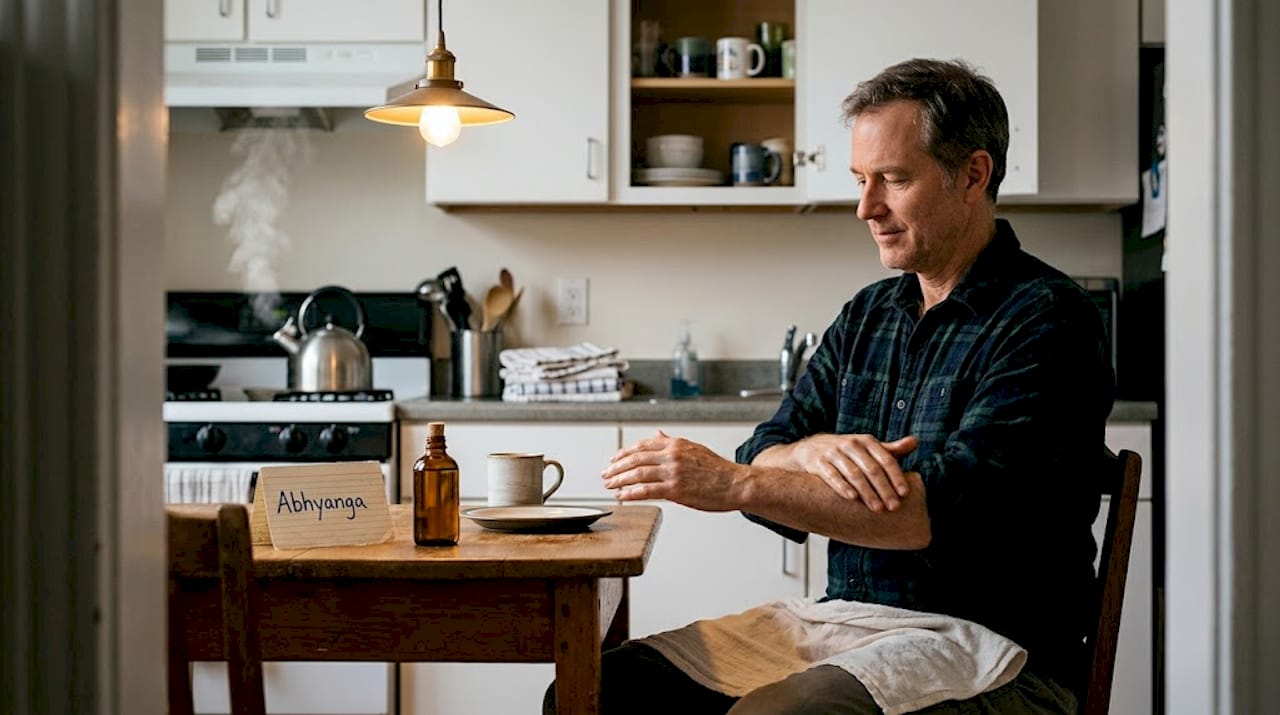
- Abhyanga (self-massage with warm oils tailored to your dosha)
- Mindfulness meditation adapted to your mental tendencies
- Dietary adjustments aligned with your constitution
- Modern delivery formats like Cognitive Relax Strips that dissolve on the tongue for fast, convenient absorption
Ayurveda’s strength lies in its insistence that relaxation is not passive. It’s something you actively build, one small ritual at a time.
It’s worth being honest: while Ayurveda has a rich traditional foundation, high-quality clinical trials are still limited compared to conventional medicine. That doesn’t make it less valuable. It means you should approach it thoughtfully, combining these practices with a healthy lifestyle for the best outcome.
How Ayurveda personalizes relaxation support
With the foundation of relaxation support set, it’s helpful to see how Ayurveda uniquely customizes these practices for you. The idea of a single relaxation solution for everyone simply doesn’t hold up in Ayurvedic thinking. Your constitution, your stress patterns, and even the season you’re in all shape what kind of support will actually work.
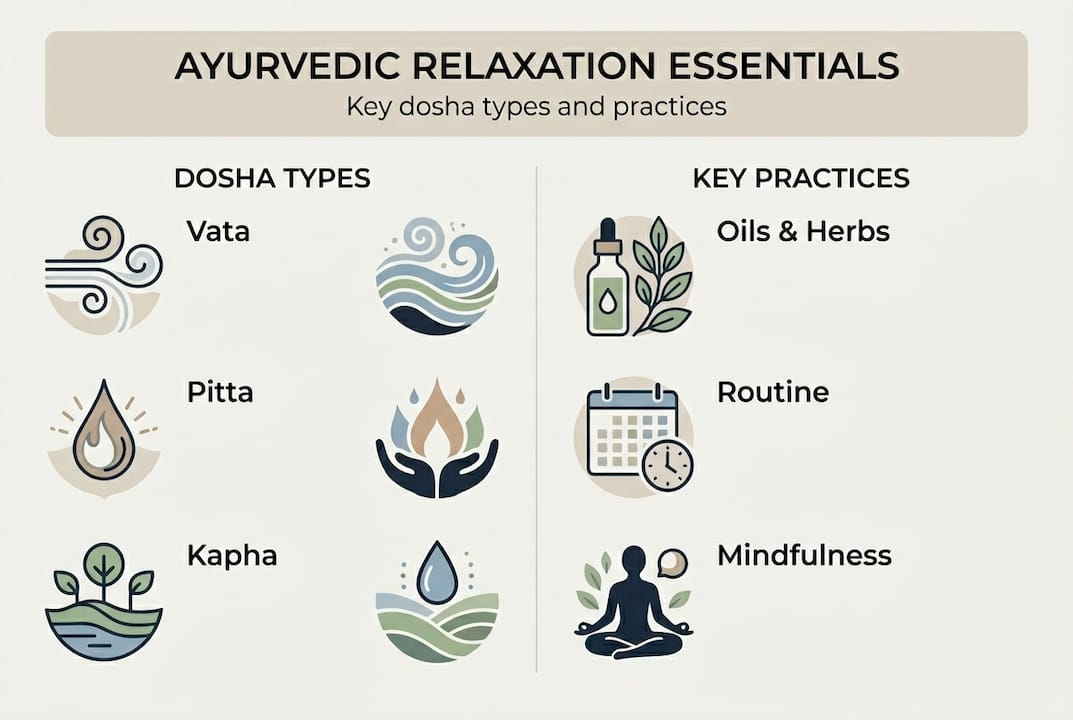
Here’s a quick breakdown of the three doshas and what they typically need:
Vata types tend to be creative and energetic but prone to anxiety, scattered thinking, and insomnia when out of balance. They benefit most from grounding, warming, and stabilizing practices.
Pitta types are driven and focused but can tip into irritability, inflammation, and burnout. Cooling and calming practices help them most.
Kapha types are steady and nurturing but may slide into lethargy, low motivation, or emotional heaviness. They need energizing and stimulating support to stay balanced.
| Dosha | Key tendencies | Recommended oils/herbs | Helpful practices | Cautions |
|---|---|---|---|---|
| Vata | Anxious, light sleep, cold | Sesame oil, ashwagandha | Gentle yoga, warm baths | Avoid overstimulation |
| Pitta | Irritable, overheated, driven | Coconut oil, brahmi | Cooling breathwork, nature walks | Avoid hot environments |
| Kapha | Sluggish, heavy, withdrawn | Mustard oil, tulsi | Vigorous exercise, dry brushing | Avoid excess sleep |
The research on dosha-tailored relaxation techniques suggests that Vata benefits from grounding oils, Pitta from cooling approaches, and Kapha from energizing methods. It also flags important contraindications: pregnancy, certain allergies, and pre-existing conditions may require modification or professional guidance before starting any new regimen.
This is the part many people skip. They read about ashwagandha, buy a bottle, and hope for the best. But if you’re a Pitta type using a heating herb when you’re already running hot, you might make things worse, not better.
Pro Tip: Before jumping into a full routine, spend one week simply observing your patterns. When do you feel most tense? What triggers it? What naturally helps? That self-knowledge is your best guide for personalizing any Ayurvedic approach.
How relaxation support fits into a modern, busy lifestyle
Personalization is only useful if you can actually implement it, so here’s how to make relaxation support practical, regardless of your schedule. The most common barrier isn’t knowledge. It’s time, or the perception of not having enough of it.
Here are the top reasons people skip their relaxation practices, and how to work around them:
- “I don’t have time.” Start with five minutes in the morning before checking your phone. A short breathing exercise or a dissolving strip with a calming herbal blend takes less time than scrolling.
- “I forget.” Stack your new habit onto an existing one. Take your supplement with your morning coffee or do a two-minute body scan before lunch.
- “I don’t see results quickly.” Consistency matters more than intensity. Small daily inputs add up to real shifts in your stress response over weeks.
- “It feels like one more obligation.” Reframe it. Relaxation support is not a task. It’s a investment in how you show up for everything else.
- “I’m not sure what to do.” Start simple. Even brief, consistent practices build real nervous system resilience.
The evidence points clearly in one direction: combining relaxation with exercise and dietary habits produces significantly better outcomes than any single practice alone. Relaxation support works best as part of a larger wellness ecosystem, not as a standalone solution.
Statistic callout: Adults who practice consistent relaxation routines alongside regular physical activity report notably greater reductions in perceived stress compared to those using either approach alone.
For people with genuinely packed schedules, practical options include enhanced cognitive relaxation strips that require no water or preparation, short guided meditations during commutes, or herbal teas sipped during a lunch break. The goal isn’t a two-hour spa ritual. It’s building a few reliable anchors in your day that signal to your nervous system that it’s safe to settle.
Natural products and supplements for relaxation support
Knowing your options makes it easier to be smart about using natural products for relaxation support. The market is genuinely broad, from loose-leaf teas to essential oils to modern dissolvable strips. Not all of it is created equal, and it pays to know what you’re looking for.
Here’s a look at some of the most researched Ayurvedic ingredients used in relaxation support:
| Ingredient | Primary effect | Evidence level | Cautions |
|---|---|---|---|
| Ashwagandha | Reduces cortisol, supports sleep | Moderate clinical trials | Avoid in pregnancy, thyroid conditions |
| Brahmi (Bacopa) | Mental calm, cognitive clarity | Good traditional and some RCT data | May interact with thyroid medications |
| Tulsi (Holy Basil) | Adaptogenic stress relief | Traditional with emerging trials | Generally safe; consult if pregnant |
| L-theanine | Promotes calm without drowsiness | Strong clinical support | Well tolerated; low risk |
| Passionflower | Reduces anxiety, improves sleep | Moderate clinical evidence | Avoid with sedative medications |
When choosing natural products, look for:
- Third-party testing for purity and potency
- Transparent ingredient labeling with no hidden fillers
- Trusted sourcing with clear information about herb origins
- Appropriate dosing backed by available research or professional guidance
- Sugar-free and clean formulations, especially in delivery formats like strips
The key principle here is that the integration with modern care is what makes natural supplements effective. They work best as one layer of your wellness approach, not as a substitute for sleep, movement, good nutrition, or medical treatment when it’s needed.
Innovative formats like fast-acting relaxation products dissolve directly on the tongue, bypassing the need for water and reaching your system quickly. For people who struggle to swallow capsules or simply want something easier on the go, these formats lower the barrier considerably.
Always check for interactions if you take prescription medications, and bring any new supplement into your routine gradually so you can track how your body responds.
Why relaxation support isn’t one-size-fits-all: what most people miss
Here’s the candid reality: most people find a relaxation method that helps, stick with it for a while, and then wonder why it stops working. Life changes. Seasons change. Your stress profile changes. What grounded you last year might not be what your nervous system needs today.
Over-reliance on a single solution, even a natural, well-researched one, can create a kind of false ceiling on your results. The people who see lasting benefits from personalized support practices are the ones who stay curious and adjust over time. They treat their relaxation routine the way they treat their fitness routine: something that evolves as they do.
Combining Ayurvedic traditions with modern wellness tools isn’t a compromise. It’s the most practical, realistic approach available. Your feedback loop, meaning how you actually feel week over week, is more useful than any generic protocol. Trust it.
Ready to experience tailored relaxation support?
If something in this guide resonated, you’re already closer than you think to building a relaxation routine that actually fits your life.
At Onyx Wellness, we’ve designed products that meet you where you are: fast, clean, and grounded in Ayurvedic tradition. Whether you want to shop Cognitive Relax Strips for a simple daily ritual or you’re ready to explore vitamins and supplements to build a fuller wellness stack, we’re in your corner. You can always visit Onyx Wellness to learn more about what might work best for your lifestyle and goals.
Frequently asked questions
Can I use relaxation support with my regular healthcare routine?
Yes, Ayurvedic relaxation support works well alongside conventional care, but it should complement it rather than replace it. Always loop in your healthcare provider if you have ongoing conditions or take medications, as the integration with modern care principle is central to using these tools responsibly.
Are there any risks or contraindications with Ayurvedic relaxation techniques?
Certain techniques and herbs may not be suitable during pregnancy, for people with specific allergies, or with certain health conditions. Contraindications like pregnancy are well-documented in the literature, so personalize your approach and consult a qualified practitioner when in doubt.
How quickly can I feel effects from relaxation support products?
Fast-acting formats like strips or herbal teas may produce a noticeable calming effect within minutes, but the deeper, more lasting changes come from consistent habits over time. Combining relaxation with diet and exercise consistently delivers better long-term outcomes than any single product used in isolation.