


Most gym-goers assume the best recovery tools come in a lab-made tub. The reality is more interesting. Certain Ayurvedic herbs and plant-based supplements are now backed by clinical data showing recovery results that rival conventional synthetics, and in some cases, they offer system-wide benefits that no single isolated compound can match. Whether you’re a competitive athlete or someone who simply wants to feel better after hard training sessions, understanding what the evidence actually says about natural sports nutrition supplements can change how you build your routine and how quickly you bounce back.
Table of Contents
- Why sports nutrition supplements matter for comprehensive recovery
- Ayurvedic and plant-based supplements: Evidence and modern applications
- Synthetics vs. naturals: Finding the sweet spot
- Maximizing results: Convenience, delivery forms, and holistic integration
- A holistic lens on supplement routines: What most articles ignore
- Take the next step toward holistic recovery with Onyx Wellness
- Frequently asked questions
Key Takeaways
| Point | Details |
|---|---|
| Ashwagandha boosts endurance | Daily root extract improves muscle strength, aerobic capacity, and recovery with proven safety for athletes. |
| Plant-based blends work | Protein blends with enough leucine can match whey’s effects for muscle building and recovery. |
| Delivery form impacts results | Choosing powders, strips, or gummies based on lifestyle makes consistency and recovery easier. |
| Mix natural and synthetic wisely | Smart combinations of both types deliver the best performance and wellness outcomes. |
| Consistency is essential | Routine use of evidence-backed supplements matters more than any single ingredient or dosage. |
Why sports nutrition supplements matter for comprehensive recovery
Recovery is not just about sore muscles. It’s a three-part challenge: managing muscle damage, fighting fatigue, and controlling inflammation. When you train hard, microscopic tears form in muscle fibers, cortisol spikes, and inflammatory markers rise. Without targeted support, this cycle slows your next session and chips away at long-term progress.
Supplements step in to fill the gaps that food alone often can’t cover fast enough. The research here is solid. Ashwagandha at 300-600mg daily root extract over 8-12 weeks improves VO2max by 4.09 ml/min/kg, boosts muscle strength, speeds recovery, and reduces fatigue in athletes. That’s not a marginal effect. And on the synthetic side, creatine, BCAAs, and omega-3s reduce soreness, inflammation, and muscle damage in ways that are consistently replicated across studies.
Here’s a quick-reference table of the most studied options:
| Supplement | Primary mechanism | Key outcome |
|---|---|---|
| Ashwagandha | HPA axis modulation, cortisol reduction | Endurance, strength, fatigue reduction |
| Creatine | ATP resynthesis | Power output, faster recovery |
| BCAAs | Protein synthesis signaling | Reduced soreness, muscle preservation |
| Omega-3s | Anti-inflammatory pathways | Less inflammation, joint support |
| Tart cherry | Antioxidant activity | Reduced soreness, better sleep |
| Magnesium | Neuromuscular function | Muscle relaxation, sleep quality |
The concrete benefits for active individuals stack up quickly:
- Faster return to training after intense sessions
- Reduced delayed-onset muscle soreness (DOMS)
- Better sleep quality, which is where most real repair happens
- Lower baseline cortisol, supporting both mood and physical output
- Improved aerobic capacity over consistent use
“Recovery isn’t a passive process. It’s something you can actively support with the right inputs, and the science now gives us a clearer map than ever before.”
Exploring natural recovery steps alongside supplementation gives you a fuller picture of what drives genuine progress. A step-by-step recovery guide can help you build this into a sustainable daily practice rather than a reactive fix.
Ayurvedic and plant-based supplements: Evidence and modern applications
Ayurveda has used adaptogenic herbs for thousands of years, and modern research is finally catching up with what traditional practitioners understood intuitively. The most studied of these is Ashwagandha (Withania somnifera). Its adaptogenic effects via HPA axis modulation, cortisol reduction, and antioxidant activity enhance holistic wellness in ways that align directly with Ayurvedic principles. It is also WADA-approved, meaning competitive athletes can use it without compliance concerns.
Shilajit is another Ayurvedic compound gaining traction. It contains fulvic acid and over 80 trace minerals, and early research suggests it may support mitochondrial function and testosterone levels, though studies are smaller and less definitive than those on Ashwagandha. Worth watching, but approach it as a complement rather than a cornerstone.
On the protein side, the old debate about plant-based versus whey is largely settled. Plant-based protein blends at 30g with 2.5g leucine match whey for muscle protein synthesis and recovery when dosed adequately. The key word is blends. Single sources like pea protein alone fall short on certain amino acids, but combining pea with soy or rice closes that gap completely.

Functional juices are another underused tool. Tart cherry and pomegranate juices reduce muscle soreness and inflammation when consumed in the days before and after exercise. Beetroot juice enhances endurance through nitrate conversion to nitric oxide, improving blood flow and oxygen delivery during training.
Here’s how natural and synthetic options compare at a glance:
| Category | Examples | Evidence level | Best use case |
|---|---|---|---|
| Ayurvedic herbs | Ashwagandha, Shilajit | Moderate to strong | Stress, endurance, hormonal balance |
| Plant-based protein | Pea/soy blends | Strong (when blended) | Post-workout muscle repair |
| Functional juices | Tart cherry, beetroot | Moderate to strong | Soreness, endurance |
| Synthetics | Creatine, whey, BCAAs | Very strong | Power, rapid muscle recovery |
- Ashwagandha: 300-600mg root extract daily, 8-12 week cycles
- Plant protein: 30g+ per serving post-workout, prioritize blends
- Tart cherry: 8-12 oz juice or concentrate, starting 2-3 days before intense training
- Beetroot: 500ml juice or 400mg extract roughly 2-3 hours pre-workout
Pro Tip: Stack Ashwagandha with a plant-based protein blend post-workout. The adaptogen addresses cortisol and systemic stress while the protein drives muscle repair. Together, they cover recovery from two different angles simultaneously. You can also explore how Ayurveda and mental wellness intersect, since mental recovery is just as real as physical recovery. For daily nutritional support, understanding daily greens benefits rounds out a well-designed natural stack.
Synthetics vs. naturals: Finding the sweet spot
Here’s the honest truth most supplement content avoids: synthetics still lead in head-to-head performance studies. Protein and creatine top meta-analyses for strength and recovery, while herbal options show promise but are limited by smaller, more heterogeneous studies. That doesn’t mean naturals are inferior. It means the research base is younger and more variable.
The smarter approach is not to pick a side. It’s to understand what each category does best and combine them strategically. Creatine is unmatched for power output and ATP recycling. Ashwagandha is unmatched for cortisol management and systemic stress. They don’t compete. They complement.
There are real caveats to watch for with natural supplements. Dosing inconsistency across products, variable bioavailability, and shorter study durations mean you need to be more selective about sourcing and more patient about timelines. A supplement that works brilliantly in a 12-week trial may need 16 weeks in your specific context.
Here’s a practical framework for building your routine:
- Identify your primary goal. Power and strength? Lead with creatine. Endurance and stress management? Prioritize Ashwagandha. Both? Use both.
- Anchor with evidence-strong options. Creatine monohydrate and quality plant protein are your foundation.
- Layer in naturals for system-wide support. Add Ashwagandha, tart cherry, or omega-3s based on your recovery gaps.
- Check compliance. If you’re a competitive athlete, verify WADA status for every botanical you add.
- Track for 8-12 weeks before judging. Most natural supplements need consistent use to show their full effect.
- Adjust based on your body’s signals. Energy, sleep quality, and soreness are your best feedback tools.
Pro Tip: The post-workout window (within 30-45 minutes of training) matters most for both routes. Take your protein and creatine immediately after. Ashwagandha can be taken with food at any time, but many athletes find evening dosing helps with sleep quality and overnight recovery.
For a broader look at what’s available, muscle building supplement options can help you see how these pieces fit together in a real product lineup.
Maximizing results: Convenience, delivery forms, and holistic integration
Knowing which supplements work is only half the equation. The other half is actually taking them consistently, and that’s where delivery form makes a real difference. Powders, gummies, and capsules all enable effective integration when properly dosed, but each fits different lifestyles differently.
Powders offer the most flexibility for protein and greens. You can adjust serving size, mix with other ingredients, and get high doses efficiently. The downside is preparation time and the need for water and a shaker. Not ideal when you’re rushing out of the gym.
Capsules work well for Ashwagandha, creatine, and omega-3s. They’re precise, portable, and require no preparation. Gummies are a good fit for tart cherry and magnesium, making it easy to stay consistent without thinking too hard about it.
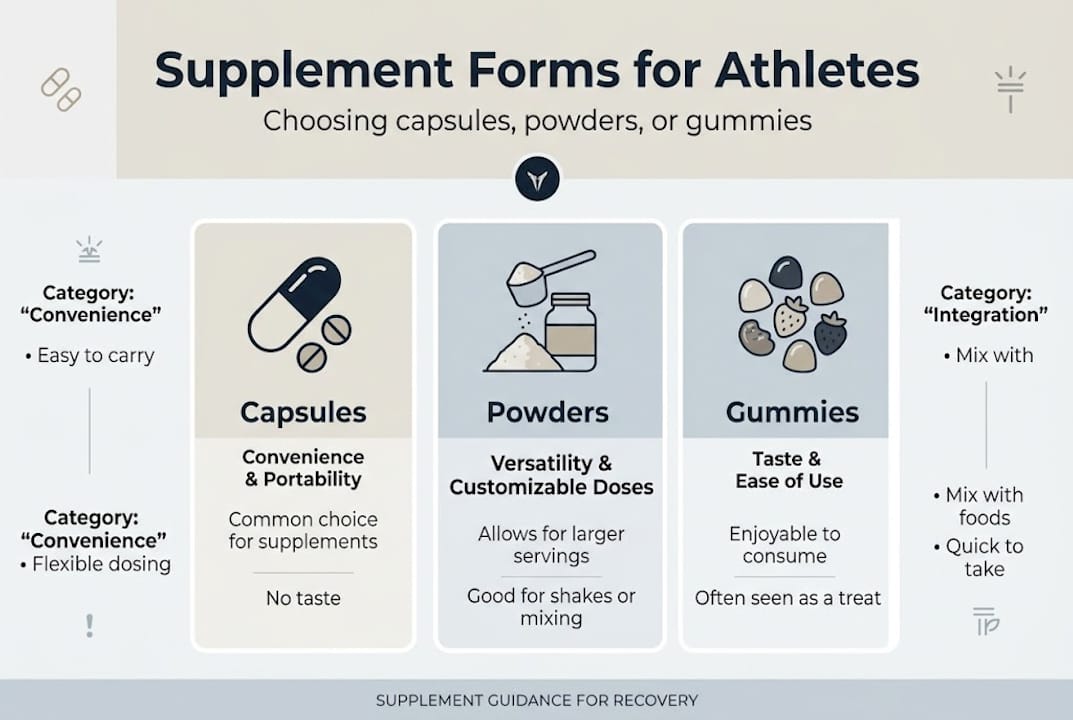
Dissolvable strips are the newest delivery format gaining traction among athletes who travel frequently or want zero-prep convenience. They absorb quickly without water, which fits the modern lifestyle that doesn’t always allow for a full supplement ritual.
Here’s a simple timing framework to build around:
- Pre-workout (60-90 min before): Beetroot juice or extract, Ashwagandha if you’re doing endurance work
- Intra-workout: BCAAs or electrolytes if sessions exceed 60-75 minutes
- Post-workout (within 30-45 min): Protein blend (30g+ with leucine), creatine, tart cherry juice or gummy
- Evening: Magnesium, omega-3s, Ashwagandha (second dose if using twice daily)
- Daily baseline: Vitamin D, greens powder with breakfast
Consistency is the single biggest predictor of results with any supplement, natural or synthetic. A routine you actually follow beats a perfect routine you abandon after two weeks. Choose delivery forms that fit your real life, not your ideal life. Revisiting recovery strategies and tools periodically helps you refine your approach as your training evolves.
A holistic lens on supplement routines: What most articles ignore
Most supplement content frames the choice as natural versus synthetic, as if picking the right category is the whole answer. It isn’t. The real variable is you: your stress load, your sleep quality, your diet consistency, and your training volume. These factors shape what “best” actually means for your body on any given week.
We’ve seen athletes run textbook supplement stacks and plateau because chronic stress kept cortisol elevated, canceling out the recovery benefits. We’ve seen others get remarkable results from a simple Ashwagandha and creatine combination because their fundamentals were solid.
The uncomfortable truth is that supplements amplify what’s already working. They don’t rescue a broken foundation. Sleep, nutrition, and stress management aren’t optional add-ons. They’re the system that supplements work within.
What we’d encourage is mindful experimentation. Try one new addition at a time, track your energy and soreness honestly, and give it a real runway of 8-12 weeks before deciding. Explore real-life holistic recovery as a framework, not a prescription. Sustainable gains come from building habits that fit your life, not from chasing the perfect stack.
Take the next step toward holistic recovery with Onyx Wellness
If you’ve made it this far, you’re already thinking about recovery the right way: strategically, holistically, and with real evidence in hand. At Onyx Wellness, we’ve built our product line around exactly this approach, fusing Ayurvedic tradition with modern delivery technology so that doing the right thing for your body is also the convenient thing.

Our vitamins and supplements collection includes options designed for active individuals who want natural, fast-absorbing formats without compromising on quality. If gut health is part of your recovery picture, our Digestive and Gut Health Strips offer a no-fuss, dissolvable solution that fits any schedule. Browse our full range and find the pieces that complete your routine.
Frequently asked questions
What are the best natural sports nutrition supplements for muscle recovery?
Top options include Ashwagandha, plant-based protein blends, tart cherry juice, and creatine, all shown to support recovery when dosed properly. Creatine, BCAAs, and tart cherry reduce soreness and inflammation, while Ashwagandha improves strength and reduces fatigue in athletes.
How much Ashwagandha should athletes take for performance and recovery?
Studies support 300-600mg daily root extract for 8-12 weeks to improve endurance and reduce fatigue safely. Consistency over that full window matters more than hitting the exact dose on any single day.
Are plant-based proteins really as effective as whey for athletes?
Yes, when properly formulated. Pea and soy blends at 30g with 2.5g leucine match whey for muscle protein synthesis and recovery. Single-source plant proteins fall short, so blends are the key.
How do supplement strips, powders, or gummies compare for athletes?
All can be effective when properly dosed. Powders, gummies, and capsules each enable easy integration, with strips and gummies offering the most convenience for busy schedules and travel.
Are Ayurvedic supplements safe for competitive athletes?
Ashwagandha is WADA-approved and well-tolerated, making it a reliable choice for competitive use. For other botanicals, always verify the source and check current compliance guidelines before adding them to your stack.