


TL;DR:
- Beet It is a scientifically supported supplement that provides standardized dietary nitrates to enhance blood flow and athletic performance. Regular, timed intake boosts blood pressure reduction and endurance, with effects strengthening over consistent use beyond two weeks. Its standardized dosing and certification make it a reliable choice over unverified beet products for health and sports optimization.
Most people looking into beet-based supplements quickly run into a wall of vague claims and confusing options. Beet it, though, is not just another trendy product on the shelf. It is one of the most studied natural performance and wellness compounds in sports nutrition, backed by over 300 independent studies since 2009. Whether you are chasing better endurance, healthier blood pressure, or a cleaner energy source without stimulants, understanding what beet supplementation actually does — and how to use it correctly — makes all the difference between results and disappointment.
Table of Contents
- Key takeaways
- What makes beet it nutritionally different
- Evidence-backed health benefits of beet it
- How to use beet it effectively
- Beet it versus other beet supplements
- My honest take on beet it
- Natural energy and recovery support from Onyxwellness
- FAQ
Key takeaways
| Point | Details |
|---|---|
| Nitrates drive the benefits | Beet It works through dietary nitrates that convert to nitric oxide, supporting blood flow and energy. |
| Timing matters for athletes | Take 300–500 mg nitrates from beet concentrate 2–3 hours before exercise for measurable performance gains. |
| Consistency beats single doses | Blood pressure benefits require 14 or more days of regular intake to show meaningful reductions. |
| Not all beet products are equal | Standardized, lab-verified nitrate content sets concentrated beet shots apart from generic powders. |
| Side effects are mostly harmless | Pink or red urine from beeturia is temporary and caused by beet pigments, not a health concern. |
What makes beet it nutritionally different
Walk past the produce section and beets look pretty ordinary. But the nutritional profile inside that deep-red root is anything but typical.
Beets are one of the richest natural sources of dietary nitrates, and that is the core reason they get so much attention in wellness and sports circles. Here is what you are actually getting from concentrated beet supplementation:
- Dietary nitrates: The primary active compound. Your body converts nitrates into nitric oxide, which signals blood vessels to relax and widen.
- Betalains: The pigments that give beets their color also act as antioxidants and anti-inflammatory agents.
- Folate, potassium, and manganese: Supporting nutrients that contribute to cardiovascular and metabolic function.
- Natural sugars and fiber: Present in whole beets, though largely removed in concentrated shots to reduce calorie load.
The conversion pathway is worth understanding. Nitrates from beets convert into nitric oxide, which relaxes blood vessels. This is fundamentally different from the nitrates found in processed meats, which can form carcinogenic compounds. Beet nitrates are paired with natural antioxidants that protect the conversion process and support heart health instead.
Beet It Sport shots, for example, contain 98% concentrated beetroot juice with just 2% lemon juice, delivering a minimum of 400 mg dietary nitrates per 70 ml shot. That concentration is deliberately standardized so you know exactly what you are getting in every dose.
Pro Tip: Nitrate levels degrade quickly at room temperature. If you are using fresh beet juice rather than concentrated shots, refrigerate and consume it within a few days to preserve potency.
Evidence-backed health benefits of beet it
Here is where the science separates beet supplements from marketing noise. The health benefits of beets are real, but they are specific. You will not find a miracle cure here. What you will find is genuine, measurable support for cardiovascular health and athletic performance.
“Consistency is key for cardiovascular benefits from beets. Occasional intake does not sustain blood pressure improvements.” — Dr. Jayne Morgan, cardiovascular health expert
The blood pressure data is among the most compelling findings. Regular beet consumption can reduce systolic blood pressure by up to 9.04 mmHg, a reduction comparable to some antihypertensive medications. That is not a trivial number. For people managing early-stage hypertension or looking for dietary support alongside medical care, that kind of consistent reduction matters.
The athletic performance research is equally strong. Beet juice improves VO₂ max, aerobic efficiency, and delays exhaustion in endurance athletes, making it one of the few natural compounds the International Olympic Committee endorses as a sports food with strong scientific backing.

Here is a quick comparison of what beet it supplementation actually supports versus what remains unproven:
| Benefit | Evidence Level | Notes |
|---|---|---|
| Blood pressure reduction | Strong | Up to 9.04 mmHg systolic reduction with consistent use |
| Athletic endurance | Strong | Reduces oxygen cost during exercise; IOC-endorsed |
| Anti-inflammatory effects | Moderate | Betalains show promise but less human trial data |
| Cognitive function | Emerging | Some studies on blood flow to brain; early stage |
| “Detox” or superfood claims | Weak | Not supported by robust evidence |
One nuance worth knowing: individual responses to dietary nitrates vary. People with higher baseline nitric oxide levels, such as those who already eat a vegetable-rich diet, may notice less dramatic results. That does not mean beet it is not working. It means the baseline shift is smaller for them.
How to use beet it effectively
Knowing the science is only half the story. Getting actual results from beet it supplementation depends on how and when you take it. Timing is not optional here. It is where most people go wrong.
-
For athletic performance: Take 300–500 mg of dietary nitrates from concentrated beet juice roughly 2–3 hours before exercise. This gives the nitrate-to-nitric-oxide conversion enough time to peak in your bloodstream.
-
For pre-competition loading: Follow a protocol of daily beet juice intake for six days before competition, then take two shots on race day itself. This approach saturates your system for maximum effect.
-
For cardiovascular wellness: Daily intake of the equivalent of four beetroots or 500 ml of beet juice is the benchmark that most cardiovascular research uses. Concentrated shots are an efficient way to hit this target without drinking a full glass of juice.
-
For sustained blood pressure support: Studies lasting 14 or more days show significantly greater systolic blood pressure reductions (around 5.11 mmHg) compared to shorter-term use (around 2.67 mmHg). The longer you stay consistent, the more your vascular system responds.
One thing to know upfront: you may notice pink or red urine after taking beet it, a condition called beeturia. It is completely harmless and caused by betalain pigments passing through your system. It surprises a lot of first-time users, but there is nothing to worry about.
Pro Tip: If you are new to beet supplementation, start with one concentrated shot per day and assess your tolerance before jumping to a performance loading protocol. Your gut will thank you.
Beet it versus other beet supplements
The beet supplement market is crowded, and not every product delivers what it promises. Understanding what sets high-quality beet it products apart helps you avoid spending money on something that will not move the needle.
Fresh beets are nutritious, but they are also inconsistent. Nitrate content in raw beets varies widely depending on soil quality, growing conditions, and storage time. A beet grown in nitrate-rich soil can have dramatically more dietary nitrate than one grown in depleted soil. You simply cannot know what you are getting from fresh produce alone.
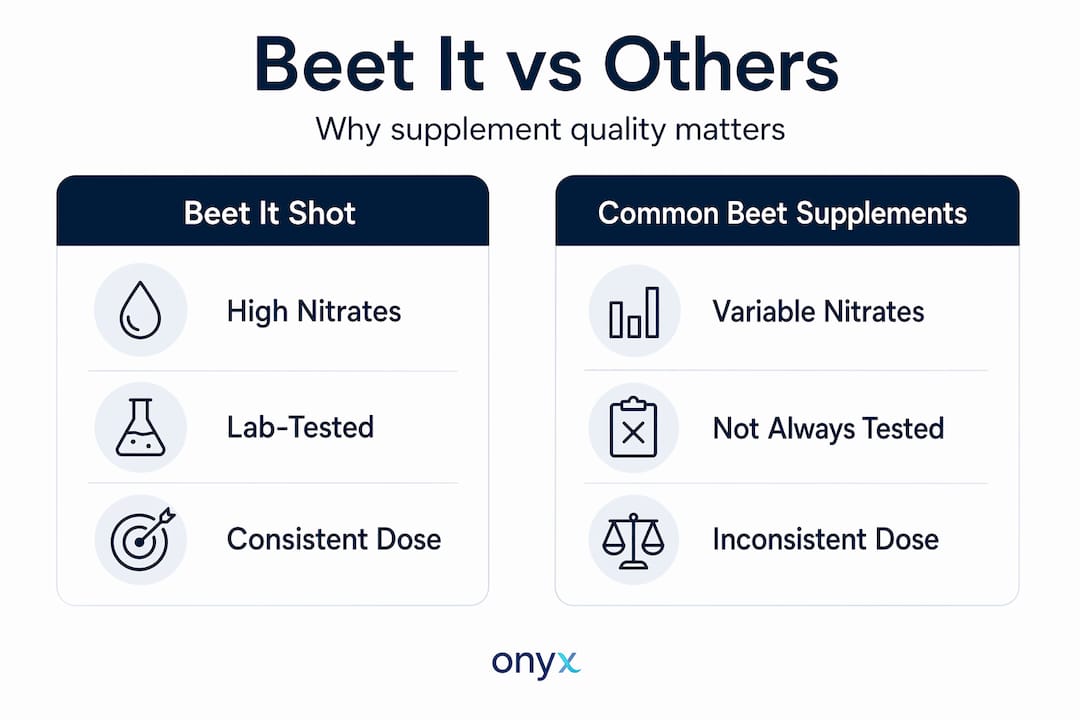
Here is how the main formats compare:
| Format | Nitrate Consistency | Convenience | Best For |
|---|---|---|---|
| Fresh beets or juice | Low (varies by crop) | Low | General dietary nutrition |
| Beet powders | Medium (may not be standardized) | High | Daily wellness, smoothies |
| Concentrated beet shots | High (lab-verified dosing) | High | Performance, clinical-level doses |
Beet It’s advantage is standardization. It has been used in over 300 independent studies precisely because researchers can rely on a consistent, known nitrate dose of 400 mg per shot. When a product is that trusted by the scientific community, that record matters.
A few other things worth checking when evaluating any beet supplement:
- Informed-Sport certification: This standardized nitrate testing and certification process verifies that products are free from banned substances, which matters for competitive athletes.
- Nitrate content per serving: Always check the label for mg of dietary nitrates, not just the amount of beet extract.
- Added sugars or fillers: Some beet powders are padded with sugar to improve taste. Read the ingredient list before buying.
If you are comparing beet it to general wellness approaches for natural energy, pairing it with consistent daily greens habits tends to produce more sustained energy benefits than relying on any single supplement.
My honest take on beet it
I have been watching beet supplementation move from niche sports nutrition into mainstream wellness for years now, and the trend makes sense. What I appreciate about Beet It specifically is that it does not try to overpromise.
In my experience, the people who get the most out of it are not those expecting a dramatic overnight transformation. They are the ones who treat it like any other evidence-based habit: consistent, patient, and paired with other smart choices. I have seen athletes report genuine improvements in workout efficiency after a week of pre-loading, and I have seen people with elevated blood pressure notice meaningful shifts after a month of daily use. Neither result is magic. Both are real.
What most beet products miss is the standardization piece. A powder that says “beet extract” on the label without specifying nitrate content is not giving you what you think you are paying for. The science behind beet it is built on specific, measurable doses. Without that, you are guessing.
My honest advice? If you are looking for natural support for cardiovascular wellness or athletic recovery, beet it earns its place in your routine. Combine it with a well-rounded approach to natural sports recovery nutrition and realistic expectations. The results will come. Just give them the time they need.
— Chris
Natural energy and recovery support from Onyxwellness
If beet it has you thinking about building a more complete natural energy and recovery routine, Onyxwellness has a range of supplements designed exactly for that kind of holistic approach.
Onyxwellness fuses Ayurvedic-inspired formulas with modern delivery technology, including fast-absorbing, sugar-free dissolvable strips that require no water. Whether you want to support gut health alongside your dietary nitrate intake, replenish iron for better oxygen-carrying capacity, or support metabolism for sustained energy output, there is a product in the lineup for you. Explore the full range at Onyxwellness to find what complements your wellness goals. If you are focusing on energy and recovery, the Iron Strips and Probiotic + Metabolism Strips are worth a close look as practical complements to your beet routine.
FAQ
What is Beet It and how does it work?
Beet It is a concentrated beetroot supplement that delivers standardized dietary nitrates, which your body converts into nitric oxide to support blood flow, cardiovascular health, and athletic performance.
How much Beet It should I take before a workout?
Sports nutrition guidance recommends 300–500 mg of dietary nitrates taken 2–3 hours before exercise, which typically equals one to two concentrated beet shots depending on the product.
Does Beet It actually lower blood pressure?
Regular, consistent beet intake can reduce systolic blood pressure by up to 9.04 mmHg, with more significant reductions seen after 14 or more days of daily use.
Why is my urine pink after taking beet supplements?
Pink or red urine, called beeturia, is a harmless and temporary effect caused by betalain pigments in beets passing through your digestive system. It is not a health concern.
Is Beet It safe for competitive athletes?
Yes. High-quality beet it products carry Informed-Sport certification, which verifies they are tested for banned substances and meet the safety standards required for competitive sport.