


Appetite isn’t a personality trait. It’s not a sign of discipline or weakness. It’s a complex hormonal process that runs quietly in the background of every meal, snack, and moment of hunger you feel throughout the day. Most people assume that if they just try harder, eat less, or find the right diet, everything clicks into place. But the truth is that appetite regulation involves a sophisticated interplay of gut hormones, brain signals, nutrition, and even ancient wellness traditions that your sheer willpower simply cannot override alone.
Table of Contents
- What does appetite balance really mean?
- The science of hunger: Hormones and the gut-brain axis
- Natural solutions: Nutrition, supplements, and Ayurveda
- Supplements and plant extracts: Hype vs. evidence
- Traditional vs. modern: Ayurveda, lifestyle, and holistic approaches
- The uncomfortable truth about appetite support
- How Onyx Wellness helps you support appetite balance every day
- Frequently asked questions
Key Takeaways
| Point | Details |
|---|---|
| Hormones drive appetite | Hunger and fullness are regulated by hormones like GLP-1, PYY, and ghrelin—not just willpower. |
| Lifestyle is the foundation | Balanced nutrition and mindful routines are more effective for appetite support than most supplements alone. |
| Evidence matters | Many plant-based and supplement claims lack strong data; focus on proven strategies like protein intake and holistic wellness for real results. |
| Integrate ancient and modern | Combining Ayurvedic wisdom with modern science can lead to more sustainable appetite balance and overall health. |
| Convenience helps consistency | Easy-to-use supplements can support—but not replace—healthy habits for long-term appetite balance. |
What does appetite balance really mean?
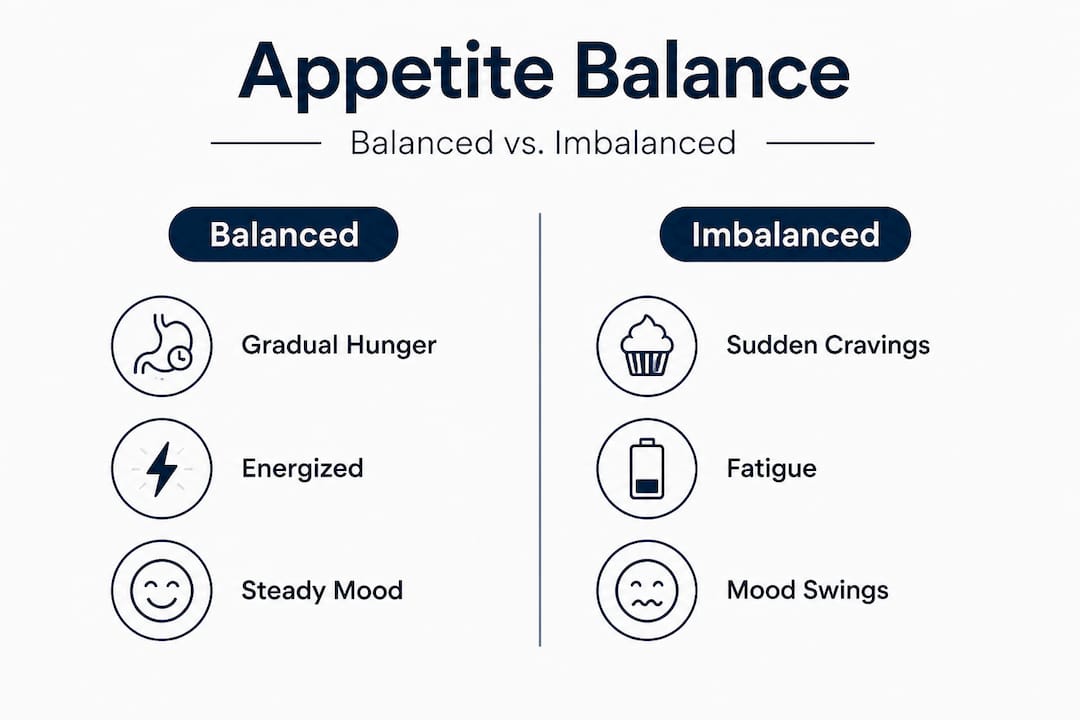
Appetite balance is not about eating as little as possible. It’s about reaching a state where your hunger and fullness signals are working in harmony, so your body naturally guides you toward the right amount of food without constant mental effort. Think of it as a thermostat for your energy intake. When it’s calibrated correctly, you eat when you’re genuinely hungry and stop when you’re genuinely full. When it’s off, you find yourself reaching for snacks an hour after a big meal or feeling ravenous despite eating a reasonable amount.
At the center of this system are three key hormones. Ghrelin is the hunger hormone, rising before meals and urging you to eat. GLP-1 (glucagon-like peptide-1) and PYY (peptide YY) are satiety hormones, released after eating to tell your brain you’ve had enough. Appetite balance supports energy homeostasis through this precise hormonal interplay, helping prevent chronic overeating and the metabolic complications that follow.
When this balance breaks down, the results are predictable and frustrating. You may experience:
- Constant cravings, especially for high-sugar or high-fat foods
- Emotional eating triggered by stress rather than genuine hunger
- Difficulty recognizing true fullness after meals
- Energy crashes that prompt reactive snacking
- A disconnect between what you know you should eat and what your body is signaling
Here’s a quick comparison of what a balanced versus imbalanced appetite looks like day-to-day:
| Balanced appetite | Imbalanced appetite |
|---|---|
| Hunger builds gradually between meals | Sudden, intense hunger or cravings |
| Fullness signals arrive during eating | Fullness arrives late or not at all |
| Stable energy throughout the day | Energy spikes and crashes |
| Satisfied with nutrient-dense foods | Craving processed or sugary options |
| Emotional state is separate from hunger | Stress or boredom triggers eating |
The good news is that appetite balance can be supported, not forced, through the right nutritional, lifestyle, and holistic strategies.
The science of hunger: Hormones and the gut-brain axis
Now that you understand the basics, it’s time to demystify what actually controls hunger signals within your body. The gut-brain axis is the communication highway between your digestive system and your brain. It carries messages in both directions, constantly updating your brain on how much food you’ve eaten, what nutrients you’ve consumed, and how much energy you have available.
The vagus nerve (the long nerve running from the brainstem to the abdomen) is a crucial player here. It transmits satiety signals directly from the gut to the brain after you eat. When this system functions properly, you feel satisfied after a reasonable meal. When it doesn’t, those messages get garbled or delayed.
Gut-brain axis disruptions from high-fat and high-sugar diets impair appetite signals, which can lead to hyperphagia, a condition where you continue eating beyond your actual energy needs. Highly processed foods, chronic stress, poor sleep, and irregular meal timing all contribute to this disruption.
“Disruptions in the gut-brain axis make it significantly harder to feel full and control cravings, creating a cycle that is difficult to interrupt through willpower alone.”
Here’s how different dietary patterns affect appetite regulation:
| Diet type | Effect on satiety hormones | Impact on cravings |
|---|---|---|
| High protein | Increases GLP-1 and PYY significantly | Reduces cravings noticeably |
| High fat/high sugar | Suppresses GLP-1 and PYY over time | Amplifies cravings and overeating |
| Whole food, plant-based | Supports balanced hormone secretion | Stable, gradual hunger cycles |
| Intermittent fasting | Temporarily lowers ghrelin over weeks | Mixed results, person-dependent |
Pro Tip: Eating slowly and mindfully actually gives your vagus nerve time to relay satiety signals to your brain, reducing the chance you’ll eat past the point of fullness before your body registers it. Try putting your fork down between bites and waiting 20 minutes before going back for seconds.
Natural solutions: Nutrition, supplements, and Ayurveda
Understanding what disrupts appetite balance begs the question: what natural strategies can help restore it? Fortunately, the evidence points to several practical approaches that don’t require extreme diets or expensive interventions.
Protein is one of the most effective natural tools for appetite support. It stimulates the release of GLP-1 and PYY while suppressing ghrelin, essentially tipping the hormonal scales toward satiety. Among protein sources, collagen peptides have drawn meaningful research attention. A randomized controlled trial found that 15 grams of collagen peptides taken post-exercise reduced ad libitum (free) energy intake by approximately 10%, or about 41 calories, in females. That may sound modest, but over weeks and months, consistent reductions like that add up significantly.
Statistic callout: 15g of collagen post-exercise cut free calorie intake by ~10% in a controlled trial.
For natural sports nutrition enthusiasts, this finding is particularly relevant. Post-workout is exactly when your muscles are rebuilding and your appetite can spike unpredictably. A targeted collagen supplement in that window supports both recovery and appetite regulation at the same time.
From the Ayurvedic perspective, appetite balance looks different but equally compelling. Ayurveda approaches obesity management by working with an individual’s dosha (body-mind constitution), strengthening agni (digestive fire), and clearing ama (toxic buildup from poor digestion). When your agni is strong, digestion is efficient, cravings are minimal, and appetite self-regulates naturally. When ama accumulates, cravings for heavy, sweet, or fried foods tend to dominate.
Here are practical natural actions that support appetite balance:
- Eat warm, cooked foods at regular meal times to support digestive fire and reduce erratic hunger signals.
- Add protein to every meal and especially post-workout to keep GLP-1 and PYY elevated for longer.
- Incorporate Ayurvedic spices like ginger, cumin, and fennel before meals to stimulate healthy digestion.
- Prioritize sleep quality because even one night of poor sleep elevates ghrelin and reduces GLP-1.
- Limit high-sugar and ultra-processed foods that chronically disrupt gut-brain signaling over time.
- Use thermogenic support mindfully as a complementary tool alongside nutritional changes, not as a standalone solution.
- Stay hydrated since thirst is frequently misread by the body as hunger, triggering unnecessary snacking.
Pro Tip: Pairing Ayurvedic meal timing habits with targeted nutrition supplements, such as Appetite Balance Strips, gives your body consistent hormonal cues rather than the unpredictable swings that come from irregular eating or snacking.
Supplements and plant extracts: Hype vs. evidence
With natural options explored, it’s time to take an honest look at what the evidence actually says about supplement claims. The supplement space is crowded, and marketing language can make it genuinely hard to separate real from hype.
A systematic review of plant extracts shows that most herbal appetite suppressants offer mostly inconclusive results in randomized controlled trials. A handful of exceptions exist, with Caralluma fimbriata being one of the more studied options showing some measurable effect, but even that evidence requires more robust long-term research. Most herbal products that promise dramatic appetite suppression simply don’t hold up under clinical scrutiny.
“The inconvenient reality is that no single plant extract has consistently demonstrated large, reliable appetite-suppressing effects across well-controlled human trials.”
For amino acid supplements, the picture is slightly more nuanced. BCAA-enriched EAA supplements show trends toward lower hunger and higher GLP-1 levels in some studies, but results are often statistically non-significant, meaning they don’t yet clear the bar of reliable scientific evidence. Prioritizing diet and lifestyle changes over unproven supplements is still the most evidence-supported recommendation.
What should you actually look for when evaluating a supplement for appetite support? Here’s a grounded checklist:
- Transparent ingredient labeling with clear doses, not proprietary blends that hide amounts
- Clinically studied ingredients at the doses used in actual research, not token amounts
- Third-party testing or verification for purity and potency
- Honest brand claims that don’t promise dramatic or overnight results
- Natural delivery formats that support absorption, such as dissolvable strips that bypass digestive delay
- Complementary ingredients that work synergistically, like protein-based formulas paired with Ayurvedic botanicals
You can also explore a deeper breakdown at best weight loss supplements to see how various products compare in terms of real evidence and ingredient quality.
Traditional vs. modern: Ayurveda, lifestyle, and holistic approaches
Stepping back, let’s look at how ancient wisdom and today’s research both shape appetite support and why a blended approach may offer the most durable results.
Modern science has given us an extraordinarily detailed picture of what regulates hunger. We can measure GLP-1 in blood samples, map the vagus nerve’s communication pathways, and run double-blind trials on specific nutrients. That precision is genuinely valuable. But Ayurveda’s holistic approach to managing digestion and appetite, built around doshas, agni, and ama, captures something that hormone graphs miss: the whole-person context that determines why appetite goes haywire in the first place.

Here’s how the two approaches compare and complement each other:
Ayurvedic approach:
- Personalized based on individual constitution (Vata, Pitta, Kapha)
- Focuses on the root cause (weak digestion, accumulated toxins)
- Uses herbs, meal timing, spices, and daily routines as tools
- Emphasizes preventing imbalance before it starts
- Builds a sustainable relationship with food over time
Modern science approach:
- Universal mechanisms studied across populations
- Targets specific hormones (ghrelin, GLP-1, PYY) and neural pathways
- Uses nutrition, supplements, and behavioral strategies
- Excellent for identifying what’s going wrong at a physiological level
- Provides measurable outcomes and replicable data
The real power comes from blending both. If you’re trying to learn about Ayurveda for mental wellness, you’ll quickly notice that stress, mood, and appetite are deeply interconnected in Ayurvedic philosophy, exactly as modern neuroscience now confirms through the gut-brain axis research.
Practical ways to blend both approaches daily include eating at consistent times (Ayurvedic principle, confirmed by circadian rhythm research), using protein-rich whole foods as your base (modern science), adding warming spices like ginger and cumin to meals (Ayurvedic), and using targeted supplements that bridge both traditions.
The uncomfortable truth about appetite support
Here’s what most wellness guides won’t tell you: the majority of people chasing better appetite control are targeting the wrong goal entirely. They want suppression. They want to feel less hungry, eat less automatically, and basically override their appetite system. But that’s not health. That’s friction.
The goal worth pursuing is balance, a state where your body’s hunger signals are honest, timely, and proportional to your actual needs. When you achieve that, you don’t need to white-knuckle every meal or obsess over portions. Your biology is doing the work for you. Getting there takes patience and integration, not a quick fix.
Quick-fix supplements and crash approaches often make things worse over time. Severe caloric restriction elevates ghrelin significantly and suppresses satiety hormones, making post-diet rebound eating nearly inevitable. Overhyped appetite suppressants may blunt hunger short term while doing nothing to fix the underlying hormonal and gut-brain disruptions that created the imbalance in the first place.
What actually works? Building mindful wellness routines that address appetite from multiple angles simultaneously: nutrition quality, sleep, stress management, consistent meal timing, and targeted supplementation as a supporting layer. When you stop looking for the one thing that fixes appetite and start building the conditions where balance naturally emerges, progress becomes consistent rather than cyclical.
This is an evolving journey, not a switch you flip. Some weeks your appetite will feel perfectly calibrated. Others it won’t. The difference between people who eventually get there and those who stay stuck is usually not a different supplement or a stricter diet. It’s the willingness to keep showing up for the process with practical, consistent habits that respect how your biology actually works.
How Onyx Wellness helps you support appetite balance every day
Ready to make healthier choices easier? Supporting appetite balance doesn’t have to feel like a full-time project.
At Onyx Wellness, we’ve built our product lineup around exactly the kind of blended, practical approach this guide describes. Our Appetite Balance Strips combine Ayurvedic-inspired botanicals with modern nutritional science in a dissolvable, sugar-free format that fits any routine, no water needed, no complicated protocols. For gut-focused support that directly addresses one of the root causes of appetite imbalance, our Digestive strips help keep your gut-brain communication on track. Browse our full range of wellness supplements to find the right combination for your goals, and let your biology work with you rather than against you.
Frequently asked questions
What hormones are most important for appetite balance?
GLP-1, PYY, and ghrelin are the central hormones regulating hunger and fullness signals, with GLP-1 and PYY promoting satiety and ghrelin stimulating hunger. Keeping these in balance is key to appetite regulation.
Can supplements alone reliably control appetite?
Most research suggests supplements are not a magic fix. Diet and lifestyle changes are significantly more effective for long-term appetite support, with supplements best used as a complementary layer on top of solid nutritional habits.
Do plant-based extracts help with appetite control?
Scientific reviews show plant extracts rarely offer significant appetite suppression in controlled trials, though a few options like Caralluma fimbriata may provide modest benefit for some individuals when combined with lifestyle changes.
How does Ayurveda address appetite balance?
Ayurveda promotes appetite control by balancing doshas and agni, the digestive fire, while preventing ama (toxic buildup from poor digestion) that disrupts healthy hunger and fullness patterns throughout the day.