


TL;DR:
- Mushroom gummies are popular supplements made from extracts of functional mushrooms with varying evidence for health benefits. The effectiveness depends on factors like mushroom part used, extract quality, and proper labeling, not marketing claims. Consumers should prioritize third-party testing and transparent ingredient details for safe, effective use.
Mushroom gummies are everywhere right now. Walk into any health store or scroll through your social feed, and you’ll see bold claims about sharper focus, deeper sleep, and calmer nerves. The reality? The science is genuinely promising in some areas, genuinely mixed in others, and the label on the bottle doesn’t always tell the whole story. Knowing how to read between the lines, spot quality ingredients, and set realistic expectations is what separates a smart purchase from an expensive disappointment. This guide gives you the honest, evidence-based picture.
Table of Contents
- What are mushroom gummies and how do they work?
- Scientific evidence: Benefits and limitations of mushroom gummies
- How to evaluate quality and safety in mushroom gummies
- Practical tips: Choosing and using mushroom gummies for wellness
- A different perspective: Why ingredient specifics matter more than marketing
- Discover reliable wellness solutions at Onyx Wellness
- Frequently asked questions
Key Takeaways
| Point | Details |
|---|---|
| Choose ingredient transparency | Aim for gummies with clear labeling, fruiting body extracts, and third-party testing. |
| Evidence-based benefits | Clinical research shows specific tasks and populations benefit most from mushroom gummies. |
| Safety matters | Avoid ambiguous, unregulated products and always check ingredient sourcing for adverse reactions. |
| Realistic expectations | Mushroom gummies are best used as a supplement, not as a miracle wellness solution. |
What are mushroom gummies and how do they work?
Mushroom gummies are chewable supplements made with extracts or powders from functional mushrooms, meaning mushroom species selected for their potential health-supporting compounds rather than culinary use. They’re typically formulated with a gummy base (pectin or gelatin), natural flavors, and a concentrated mushroom ingredient, then sold as a convenient daily supplement.
The most common mushroom types you’ll find in gummies include:
- Lion’s Mane (Hericium erinaceus): Linked to cognitive support and nerve health
- Reishi (Ganoderma lucidum): Associated with relaxation and immune modulation
- Cordyceps (Cordyceps militaris or sinensis): Studied for energy, sleep, and endurance
- Chaga (Inonotus obliquus): Valued for antioxidant properties
- Turkey Tail (Trametes versicolor): Researched for immune support
Each species contains different concentrations of active compounds, primarily beta-glucans (complex sugars that interact with immune receptors) and other bioactive molecules. The gummy format appeals to people who want a tastier, more convenient alternative to capsules or powders, and that convenience factor has driven massive market growth.
One important distinction worth knowing: as noted by the Minnesota Department of Agriculture, functional mushroom gummies are classified as dietary supplements, which means the FDA does not approve them before they hit shelves. Manufacturers must include a Supplement Facts panel and accurately label their products, but there’s no pre-market safety review. That regulatory gap is exactly why understanding quality markers matters so much.
Here’s a quick look at common mushroom types and their primary wellness focus areas:
| Mushroom | Primary focus area | Key active compounds |
|---|---|---|
| Lion’s Mane | Cognitive support, nerve health | Hericenones, erinacines |
| Reishi | Relaxation, immune support | Beta-glucans, triterpenes |
| Cordyceps | Energy, sleep, endurance | Cordycepin, adenosine |
| Chaga | Antioxidant support | Melanin, polyphenols |
| Turkey Tail | Immune modulation | PSK, PSP, beta-glucans |
You can explore mushroom gummies across different formulations to see how brands approach these ingredient combinations. For a broader look at what to expect, the benefits and safety guide covers the full picture in detail.
Scientific evidence: Benefits and limitations of mushroom gummies
With the basics covered, it’s vital to explore what the clinical research actually says about the benefits and limits of mushroom gummies. The honest answer is that the evidence is promising but uneven, and understanding that nuance protects you from both over-hyped expectations and unfair dismissal of real benefits.
Lion’s Mane: A closer look at the cognitive evidence
Lion’s Mane is probably the most talked-about mushroom for mental clarity. The research, though, tells a more textured story. A recent acute-dose trial of Lion’s Mane extract in healthy younger adults found no significant effect on a global cognitive composite score and no mood benefit overall. However, the same trial did find improvements in specific domains, particularly psychomotor speed and fine motor tasks (like pegboard tests), while other cognitive areas showed no change.
What does that mean for you? It means Lion’s Mane may support certain aspects of brain function without being a universal cognitive booster. Results depend heavily on:
- The dose and extract concentration used
- The cognitive tasks being measured
- The age and baseline health of the study population
- Whether the dose is acute (single) or taken consistently over time
This is not a reason to dismiss Lion’s Mane. It’s a reason to approach it with realistic expectations and to look for products with meaningful extract concentrations rather than token amounts.
Cordyceps: Stronger evidence in specific populations
Cordyceps has a more compelling clinical track record in certain contexts. Randomized trials of Cordyceps fermentation broth and mycelium approaches have reported meaningful improvements in sleep outcomes for people with primary insomnia, as well as symptom and quality-of-life improvements in long-COVID populations. These are real, clinically significant findings, not just wellness marketing.
“The key takeaway from Cordyceps research is context: the evidence is strongest in populations dealing with specific challenges like sleep disruption or post-illness fatigue, rather than in healthy adults seeking general enhancement.”
That distinction matters. If you’re dealing with disrupted sleep or recovering from illness, Cordyceps-based gummies may offer genuine support backed by clinical data. If you’re a healthy adult hoping for a dramatic energy surge, the evidence is thinner.
For a deeper look at how cognitive and wellness evidence stacks up across supplement categories, the research landscape is worth exploring. And for those specifically interested in relaxation and cognitive support from Reishi, there’s a growing body of research worth reviewing too.
Setting realistic expectations
The bottom line on the science: mushroom gummies are not miracle supplements, but they’re also not pure hype. The evidence supports targeted benefits in specific contexts, and ongoing research continues to refine our understanding. Treating them as one supportive tool within a broader wellness routine, rather than a standalone solution, is the most evidence-aligned approach you can take.
How to evaluate quality and safety in mushroom gummies
Understanding benefit claims is important, but knowing how to assess quality and safety is critical to smart purchasing. This is where most consumers get tripped up, because the gap between a well-made mushroom gummy and a poorly formulated one can be enormous, even when the packaging looks similar.
Fruiting body vs mycelium-on-grain: Why it matters
This is one of the most important distinctions in the mushroom supplement world, and most labels don’t make it obvious. The fruiting body is the visible part of the mushroom (the cap and stem), which contains the highest concentrations of active compounds like beta-glucans. Mycelium-on-grain, by contrast, is the root-like structure grown on a grain substrate. The final product often contains significant amounts of grain starch with relatively lower concentrations of the active compounds you’re actually paying for.
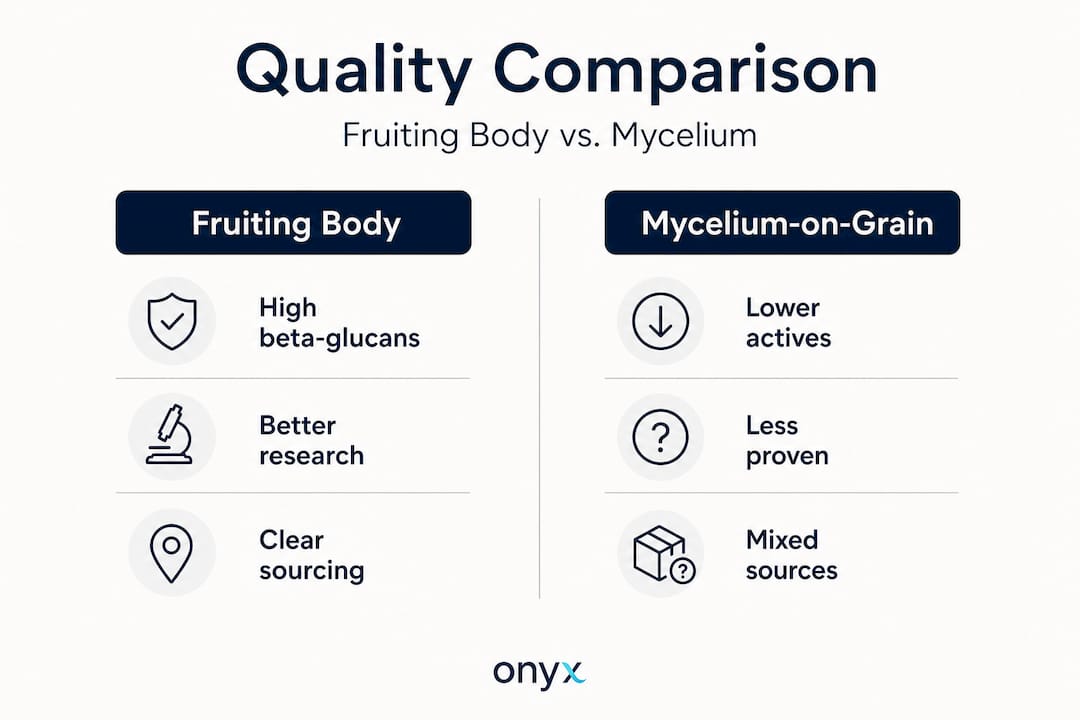
As WIRED’s review of mushroom gummies highlights, reputable products specify whether they use fruiting body extracts and, where available, provide standardized beta-glucan content and third-party testing results. If a label just says “mushroom blend” without specifying the part used, that’s a flag worth noting.
Key quality markers to look for:
- Fruiting body specification on the label or product page
- Standardized beta-glucan percentage (typically 20-40% for quality extracts)
- Third-party Certificate of Analysis (COA) from an independent lab
- Clear dosage information per serving
- No proprietary blends that hide individual ingredient amounts
Safety considerations you shouldn’t overlook
Not all mushroom species are created equal from a safety standpoint. The Minnesota Department of Agriculture’s consumer safety guidance specifically warns that some products include species like Amanita muscaria, which can cause serious adverse reactions in certain consumers. The FDA’s stance on these species varies depending on whether the product is classified as a conventional food or a dietary supplement, adding another layer of complexity.

Stick to well-researched species (Lion’s Mane, Reishi, Cordyceps, Turkey Tail, Chaga) from brands that are transparent about sourcing. Avoid purchasing from unregulated online marketplaces where labeling accuracy is harder to verify.
Pro Tip: Before buying any mushroom gummy, search the brand name plus “COA” or “third-party testing.” Reputable companies make these documents readily available. If you can’t find them, that tells you something important.
For a thorough breakdown of what to look for, the ingredient transparency guide walks through each quality marker in practical terms. If you want to see what a high-quality gummy example looks like in practice, it’s worth comparing the label details.
Practical tips: Choosing and using mushroom gummies for wellness
Once you know what to look for, here are proactive steps and real-world tips to help you put mushroom gummies to use in your wellness routine. The goal isn’t perfection. It’s making a genuinely informed choice that fits your health goals.
-
Define your wellness goal first. Are you looking for better focus during work hours? Deeper sleep? Immune support? Each goal points toward a different mushroom species. Matching the mushroom to the goal is step one.
-
Read the Supplement Facts panel carefully. Look for the mushroom species name (both common and Latin), the part used (fruiting body or mycelium), and the extract ratio or standardized percentage. If these details are missing, the product may not be worth your money.
-
Start with a consistent dosing schedule. Many mushroom compounds work better with regular, sustained use rather than occasional doses. Give a product at least four to six weeks of consistent use before evaluating its effects.
-
Prioritize third-party tested products. Independent lab testing verifies that what’s on the label is actually in the bottle, and that there are no contaminants like heavy metals or pesticides.
-
Look for organic certification where possible. Some companies entering the gummy market, like those highlighted in a recent Business Wire press release, emphasize USDA organic mushroom gummies made from whole fruiting bodies, signaling a commitment to quality that goes beyond basic compliance.
-
Consider delivery format alongside gummies. If you want faster absorption, dissolvable strips or liquid extracts may outperform gummies in bioavailability. For those interested in focus-enhancing mushroom supplements in strip form, that format offers a convenient, water-free alternative.
Pro Tip: Keep a simple wellness journal for the first month of using any new mushroom supplement. Note your sleep quality, focus levels, and energy each day. Patterns become visible over time, and you’ll have real personal data to guide your next decision.
A different perspective: Why ingredient specifics matter more than marketing
Stepping back from practical advice, let’s consider what truly matters when integrating mushroom gummies into a wellness regimen. And here’s the uncomfortable truth: most people choose supplements based on packaging design and marketing language, not ingredient specifics. That’s not a character flaw. It’s just how our brains work when we’re overwhelmed with options.
But in the mushroom supplement category, that shortcut costs you. A beautifully branded product with “adaptogenic mushroom complex” on the front label could contain mycelium-on-grain with minimal active compounds, while a less flashy product with a detailed Supplement Facts panel could deliver three times the beta-glucan content per serving. The packaging doesn’t tell you that. The label does, if you know how to read it.
We’ve seen this pattern play out repeatedly in the wellness space. A new ingredient gets buzz, brands rush to add it to their products in token amounts, and consumers spend months wondering why they’re not feeling any different. The answer is almost always in the sourcing and concentration, not the concept.
The health-conscious selection methodology recommended by independent reviewers is straightforward: prefer products that specify the mushroom part used, provide transparent ingredient statements, and back their claims with third-party testing or Certificates of Analysis. Be especially cautious with unregulated retailers, where label accuracy is harder to guarantee and the risk of mislabeled or contaminated products is real.
This isn’t about being cynical toward the mushroom wellness category. The underlying science is genuinely interesting and continues to develop. It’s about recognizing that the value of any supplement lives in its ingredients, not its branding. For those who want to go deeper on making that call with confidence, the in-depth selection guide is a solid next step.
Discover reliable wellness solutions at Onyx Wellness
If you’ve made it this far, you’re already ahead of most supplement shoppers. You know what to look for, what the science actually says, and how to avoid the most common pitfalls. The next step is finding products that meet those standards without the guesswork.
At Onyx Wellness, we build our mushroom supplements around the same criteria we’ve outlined here: ingredient transparency, functional mushroom sourcing, and formats designed for real-life convenience. Whether you’re drawn to the focus-supporting potential of our mushroom focus strips or the calming, relaxation-oriented blend in our reishi relax gummies, every product comes with clear ingredient details so you can make an empowered choice. Explore the full range and find the right fit for your wellness goals.
Frequently asked questions
Are mushroom gummies safe for daily use?
Most mushroom gummies are generally safe for daily use when sourced from reputable brands with clear ingredient labeling, but always verify third-party testing and avoid products with undisclosed or ambiguous ingredients. The FDA does not pre-approve dietary supplements, so the responsibility for quality verification falls on the consumer and the brand.
Do mushroom gummies really help with mental clarity and relaxation?
Evidence is mixed and task-specific, particularly for Lion’s Mane, where a clinical trial found mixed cognitive results depending on which tasks were measured and the study population involved. Results vary based on dose, extract quality, and individual factors, so consistent use with realistic expectations is key.
What should I look for in high-quality mushroom gummies?
Prioritize fruiting body extracts, third-party lab testing, and transparent ingredient statements that specify the mushroom species and part used. As WIRED’s review advises, fruiting body specification and independent testing are the two most reliable quality signals available to consumers.
Are there any mushroom gummies suitable for sleep or fatigue?
Cordyceps gummies have the strongest research backing for sleep-related benefits, with clinical trials reporting improvements in sleep outcomes for people with primary insomnia and quality-of-life improvements in long-COVID populations. Look for Cordyceps products that specify extract concentration and have documented clinical-grade sourcing.