


Not all protein powders are built the same. If you’ve been mixing a standard shake after workouts and still struggling with soreness, slow recovery, or low energy, you’re not alone. Ayurvedic-inspired recovery protein powders take a fundamentally different approach by pairing high-quality protein with time-tested herbs that address muscle repair, stress, digestion, and stamina together. This guide breaks down what these blends actually contain, why the combination matters, and how to decide whether one belongs in your recovery routine.
Table of Contents
- What is Ayurvedic-inspired recovery protein powder?
- How does recovery protein powder help muscle repair and recovery?
- Evidence and results: What does research say?
- Ayurvedic vs. standard protein powders: Which is right for you?
- Why a holistic approach to recovery works better than single-focus protein supplements
- Taking the next step: Ayurvedic wellness solutions for better recovery
- Frequently asked questions
Key Takeaways
| Point | Details |
|---|---|
| More than muscle repair | Ayurvedic recovery protein powders support strength, digestion, and stress resilience together. |
| Backed by adaptogens | Evidence shows herbs like Ashwagandha enhance stamina, reduce soreness, and speed recovery. |
| Whole-body wellness | Gentle on digestion and effective for busy, active users seeking long-term health, not just gains. |
| Choose for your needs | Pick blends (plant or whey) based on your digestive profile, lifestyle, and training intensity. |
What is Ayurvedic-inspired recovery protein powder?
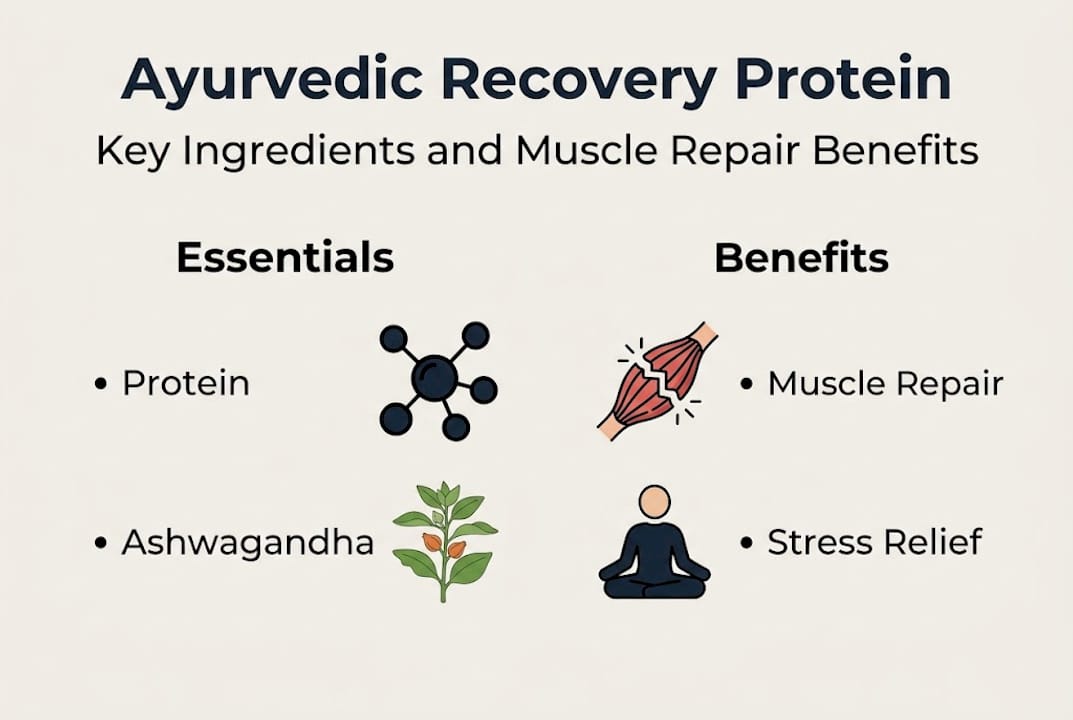
Ayurvedic-inspired recovery protein powder is not just a flavored protein shake with a marketing twist. It is a deliberate fusion of concentrated protein sources and synergistic herbs drawn from Ayurvedic tradition, designed to support your body on multiple levels at once.
On the protein side, you will typically find either whey protein (fast-absorbing, complete amino acid profile) or plant-based options like pea protein. Both deliver the building blocks your muscles need after exercise. What sets these products apart is the herbal layer added on top.
The most common Ayurvedic herbs included are:
- Ashwagandha: an adaptogen that helps regulate cortisol and reduce post-exercise stress
- Moringa: rich in antioxidants and micronutrients that support cellular repair
- Shatavari: traditionally used for stamina and hormonal balance
- Methi (fenugreek): known to aid digestion and stabilize blood sugar
- Ajwain (carom seeds): supports gut motility and nutrient absorption
- Shilajit: a mineral-dense resin linked to energy production
- Gokshura: used for physical strength and endurance
A typical serving of a quality Ayurvedic recovery protein powder delivers around 23 to 25g of protein, 500mg of Ashwagandha, and 5.5 to 6g of branched-chain amino acids (BCAAs). That combination is meaningfully different from a conventional powder. Research confirms that Ayurvedic-inspired protein blends combining whey or plant proteins with herbs like Ashwagandha, Moringa, Shatavari, Methi, and Ajwain support muscle repair, reduced soreness, enhanced stamina, and digestion.
| Component | Typical amount per serving |
|---|---|
| Protein (whey or plant) | 23 to 25g |
| BCAAs | 5.5 to 6g |
| Ashwagandha extract | 500mg |
| Herbal blend (varies) | 200 to 500mg |
This makes Ayurvedic blends especially appealing for active individuals and busy professionals who want recovery support without relying on a cabinet full of separate supplements. Think of it as stacking benefits in a single scoop, with better digestion support built right into the formula.
How does recovery protein powder help muscle repair and recovery?
With the key ingredients clarified, it is time to break down how they actually assist muscle repair and holistic recovery.
Your muscles repair themselves through a process called muscle protein synthesis. This requires a steady supply of essential amino acids, especially leucine, isoleucine, and valine, the three BCAAs. Complete proteins like whey or a well-combined plant blend provide these in sufficient quantities. But what happens after you consume them matters just as much as the intake itself.
Here is how the full mechanism works:
- Protein supplies amino acids that trigger muscle protein synthesis within 30 to 60 minutes post-workout.
- BCAAs at 5.5 to 6g provide targeted fuel for muscle fiber repair, reducing breakdown during recovery.
- Ashwagandha lowers cortisol, the stress hormone that actively breaks down muscle tissue when elevated after intense exercise. Reduced muscle damage and soreness with increased stamina are among the documented effects of Ashwagandha supplementation.
- Ajwain and Methi support digestion, ensuring the protein you consume is actually absorbed and put to use rather than passing through incompletely processed.
- Anti-inflammatory herbs like Moringa and Shatavari reduce the oxidative stress that prolongs soreness and slows tissue healing.
“Sustainable recovery isn’t just about how much protein you consume. It’s about how well your body absorbs it, how quickly stress hormones recede, and how efficiently inflammation resolves. Ayurvedic herbs address all three.”
The synergy between these elements is what separates Ayurvedic-inspired recovery powders from standard options. Muscle support supplements that combine adaptogens with protein give your body a broader toolkit for bouncing back faster.

Pro Tip: Take your Ayurvedic recovery powder within 45 minutes after your workout for maximum amino acid uptake and cortisol management. Pair it with a small carbohydrate source to further support glycogen replenishment.
Evidence and results: What does research say?
Understanding the mechanism is important, but what do real studies and experience show about the outcomes?
The most relevant research involves a formulation combining whey protein with Ayurvedic herbs. In animal studies, the herbal whey group showed significantly improved grip strength, treadmill time, and muscle glycogen compared to the control group, with results reaching statistical significance (p<0.05). That is not a small margin. Muscle glycogen is critical for sustained endurance and output, so this finding carries real practical meaning.
On the Ashwagandha side specifically, human-level research is more developed. Studies show meaningful improvements in VO2 max and Harvard Step Score (a measure of cardiovascular fitness and recovery speed), which both point to better aerobic capacity and faster bounce-back after exertion.
Key research takeaways at a glance:
- Herbal whey formulations improved physical performance markers vs. standard protein in animal models
- Ashwagandha consistently supports strength gains and reduced exercise-induced muscle damage
- Digestive herbs like Ajwain improve the bioavailability of other nutrients in the blend
- No large-scale human randomized controlled trials (RCTs) on the full blended powder currently exist
| Supplement type | Performance benefits | Digestion support | Stress reduction |
|---|---|---|---|
| Standard whey | Strong | Low | None |
| Plant-based only | Moderate | Moderate | None |
| Ayurvedic herbal blend | Strong | High | Yes |
It is worth being transparent here. As noted in Ayurveda-based nutrition perspectives, whole Ayurvedic superfoods are preferred over powders in traditional practice, and human RCTs on the full blended formulas remain limited. That said, the individual herb data and animal studies are encouraging and consistent.
If you want an additional layer of physical support alongside your recovery protocol, pairing your powder with creatine for muscle strength is a well-established strategy backed by extensive human research.
Ayurvedic vs. standard protein powders: Which is right for you?
You now know the science and results. Here is how different recovery protein options stack up, to help you decide what fits your regimen and goals.
The core difference comes down to what problem you are primarily trying to solve.
Standard whey protein excels at rapid muscle protein synthesis. It absorbs quickly, delivers a high concentration of BCAAs, and has decades of human research behind it. If your only goal is maximizing muscle mass in a single dimension, it performs well. But some people experience bloating, gut discomfort, or inflammation from dairy-derived whey, especially with high-frequency use.
Ayurvedic blends take the scenic path. They are generally gentler on digestion, address stress and inflammation simultaneously, and are well-suited for people who use protein supplements daily or who have wellness goals beyond just muscle size. According to holistic nutrition perspectives, Ayurvedic approaches favor balance and a sattvic (pure, wholesome) relationship with nutrition rather than a single-minded focus on output.
Pro Tip: If you experience bloating or sluggishness after standard whey, try a plant-protein Ayurvedic blend for two weeks. The digestive herbs alone may make a noticeable difference in how you feel post-shake.
Here is a simple breakdown of who benefits most from each option:
- Choose standard whey if you prioritize fast absorption, are lactose-tolerant, and have a single focus on muscle mass
- Choose an Ayurvedic blend if you train frequently, deal with post-workout stress or poor sleep, have sensitive digestion, or want a supplement that supports your overall wellness not just one metric
- Choose plant-herb blends if you are dairy-free, prefer a gentler formula, or have a wellness-first mindset that values the benefits Ayurvedic superfoods bring alongside protein
Neither option is universally superior. The right choice depends on your body, your training load, and what recovery actually means to you.
Why a holistic approach to recovery works better than single-focus protein supplements
Here is something we rarely say plainly enough: most people who plateau in their recovery are not eating too little protein. They are ignoring everything around it.
Cortisol stays elevated because stress is unmanaged. Digestion is inefficient so absorption suffers. Inflammation lingers because the diet lacks anti-inflammatory support. And yet the default fix is always “add more protein.” That is a narrow view of a wide problem.
Ayurvedic-inspired blends reflect what traditional protocols have always understood: the body recovers as a system, not as isolated parts. Adaptogens in your corner mean stress hormones work with your recovery instead of against it. Digestive herbs mean the protein you consume is actually used. Supporting digestion naturally is not a secondary concern. It is foundational.
Sustainable recovery comes from that full-spectrum approach. Single-function supplements are useful tools, but they are one piece. When you address protein, adaptogens, and gut health together, you stop chasing symptoms and start building real resilience.
Taking the next step: Ayurvedic wellness solutions for better recovery
Ready to try a smarter approach to recovery? Onyx Wellness offers solutions tailored to your needs.
If this article has you rethinking your recovery stack, you are in the right place. At Onyx Wellness, we believe recovery should work on every level, not just muscle mass.

Our range of Ayurvedic-inspired wellness products is designed to meet the demands of active, health-conscious people who want quality they can trust. From adaptogen-enriched recovery options to targeted digestive support, every product is built with transparency and real ingredients. Explore our full supplement offerings to find what fits your current routine and wellness goals. Your recovery deserves more than a single ingredient.
Frequently asked questions
What makes Ayurvedic recovery protein powder different from regular protein powder?
Ayurvedic recovery protein powder combines traditional protein sources with adaptogenic herbs for enhanced muscle repair, stress reduction, and improved digestion. Unlike standard powders, the herbal and protein blend targets muscle, stress, and gut health simultaneously.
Is Ayurvedic protein powder safe for daily use?
For most healthy adults, everyday use is safe when following recommended dosages, though you should consult your healthcare provider if you have existing medical conditions or take medications. Plant-herb proteins at recommended levels have shown a favorable safety profile in available studies.
Can plant-based powders be as effective as whey for muscle repair?
Yes, particularly when blended with herbs that support absorption, reduce inflammation, and enhance stamina, though whey still offers a faster rate of muscle protein synthesis. Plant plus herb blends can match whey’s effectiveness for individuals with sensitive digestion or dairy intolerance.
Are there strong clinical trials proving their recovery benefits?
Full human studies on blended Ayurvedic protein powders are currently limited. Positive results come mainly from animal research and individual herb studies, with no human RCTs on full powders yet available at scale.